
Can You Get Veneers With Crooked Teeth?
Crooked teeth are a serious cosmetic concern that many people struggle with due to genetics, poor eating habits, thumb sucking, tongue thrusting or jaw size. Can you get veneers with crooked teeth? Many people ask this question as veneers offer a quick fix to the misalignments compared to other treatments.
Yes, you can get veneers with crooked teeth, but only when they have mild to moderate misalignments. For the severe misalignment, treatments like braces, aligners or crowns are an ideal choice as they address the underlying issue of the crookedness. Let’s learn in detail about choosing veneers for crooked teeth, what factors to consider, how they can help, and what the better alternatives are.
What Are Dental Veneers?
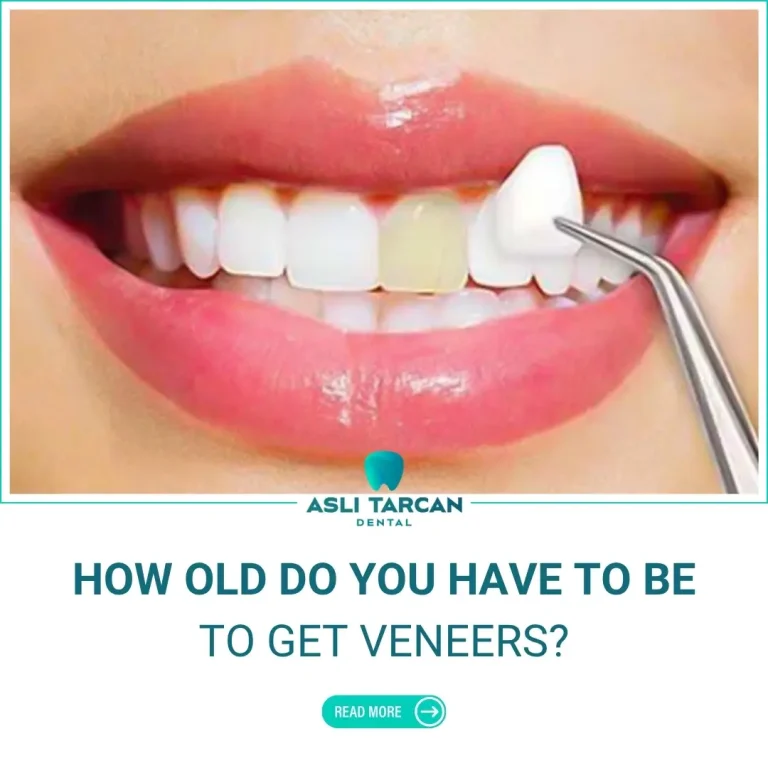
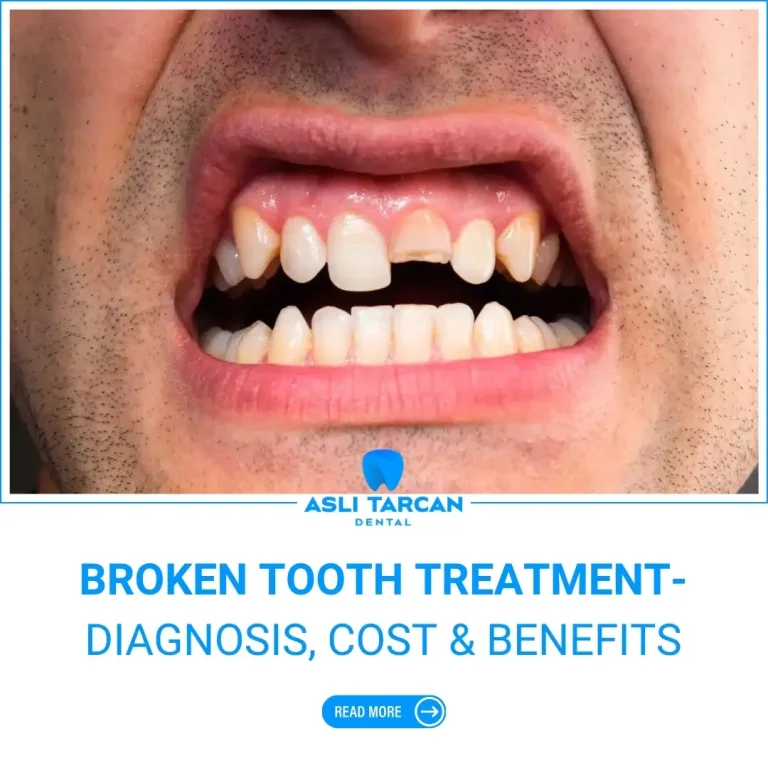
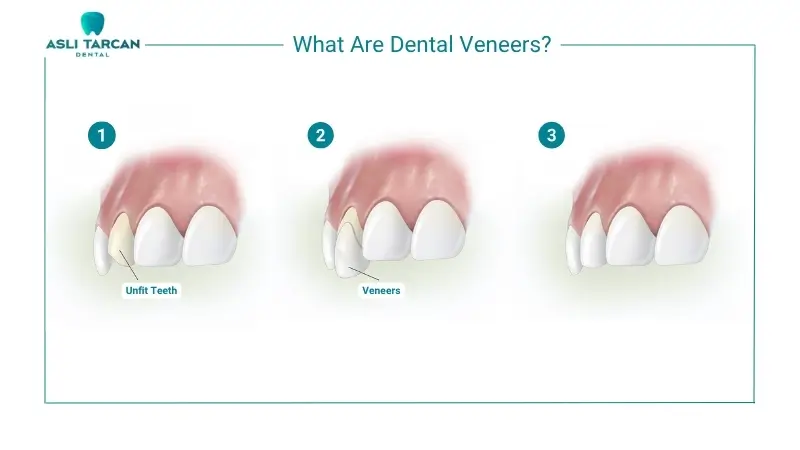
Dental veneers are the custom-made shells, placed on the front surface of the teeth, hiding all the imperfections such as chips, gaps, misalignment, mild to moderate crookedness and the discoloration.
They’re like a mask placed on top of your teeth that creates a straighter, brighter and perfect smile. Many types of veneers exist, but the most commonly used ones are composite and porcelain veneers.
The composite veneers are reversible, affordable, and offer a natural-looking smile, but are less durable. In contrast, porcelain veneers are more expensive but way more durable and offer long-lasting and natural results.
Can You Get Veneers With Crooked Teeth?
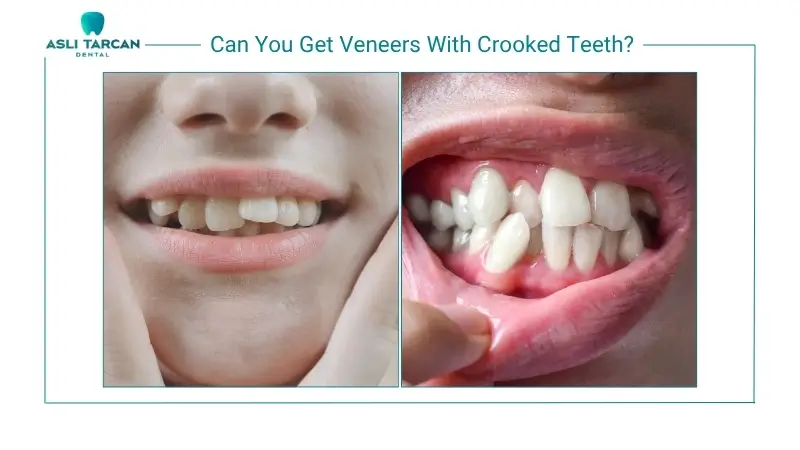
Yes, you can get veneers with crooked teeth, as they offer a quick and convenient fix. However, they should only be considered when the misalignment is mild to moderate, not severe.
They only create a straighter appearance by hiding the misalignment, instead of fixing it from the depth.
The best is to contact your dentist, and they’ll tell you if veneers are a good choice for you or if orthodontic treatments can do the work.
How Do Veneers Transform Crooked Teeth?
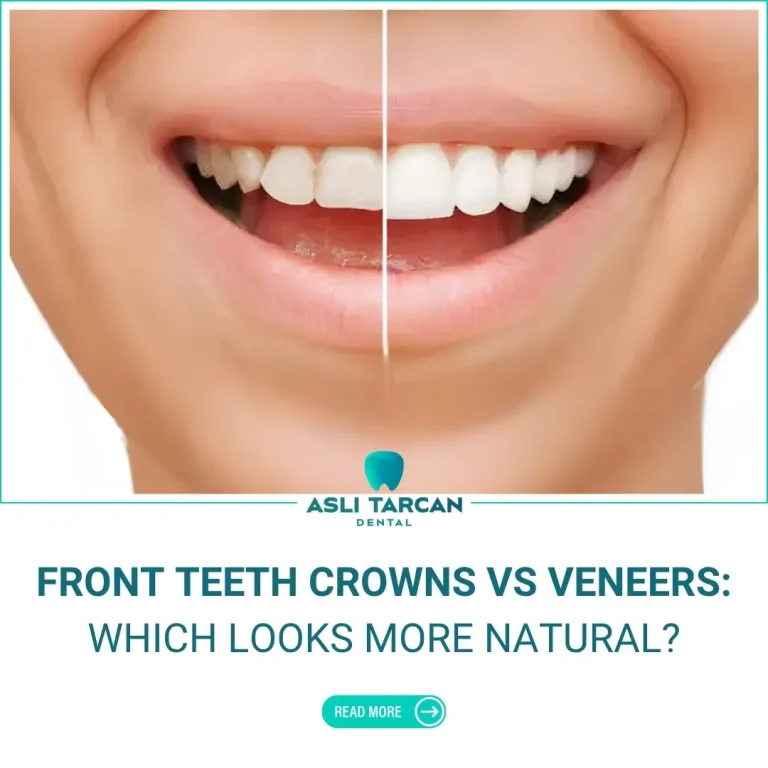
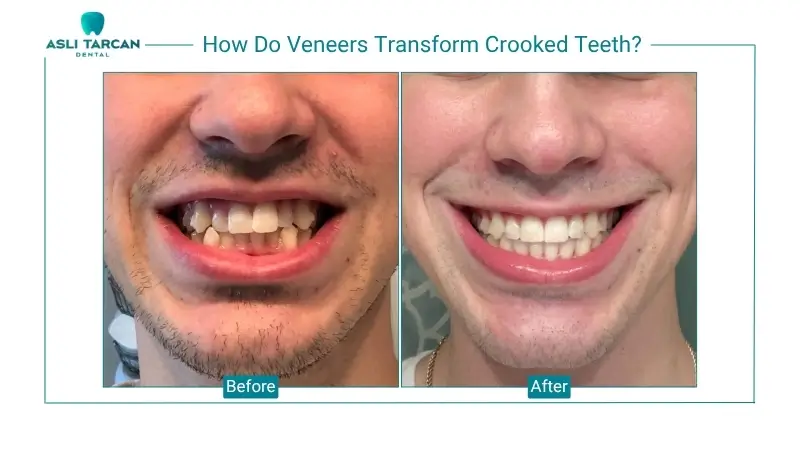
Instead of moving the teeth position or aligning them, veneers mask crooked teeth. They’re placed over the front surface of the teeth that hides all the imperfections, along with crookedness, misalignment, and discoloration.
They make the teeth look symmetrical, brighter and perfect, giving you a beautiful and natural smile. They also adjust the tooth size and proportions to make the teeth balanced.
Common Issues Veneers Can Correct
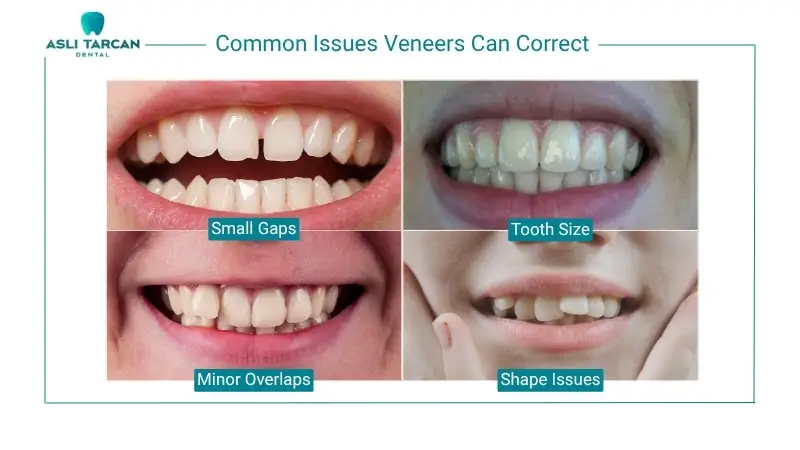
Dental veneers can correct small gaps, tooth size, minor overlaps, shape issues and slight misalignments.
Small Gaps
Veneers can fix the tiny spaces between the teeth by covering them up and making your smile smoother and even without orthodontic treatments.
Tooth Size
Some people have too big or too small teeth, which makes the teeth misaligned and unattractive. Veneers reshape them for a more even length and appearance.
Minor Overlaps
Veneers can also fix the slight crowding or overlapping by covering the visible part of the teeth. It makes the teeth look aligned and symmetrical. However, they only work for the mild crowding, not the severe ones.
Shape Issues
Dental veneers can also fix the oddly shaped or disproportionate teeth by making them look uniform and natural.
Slight Misalignments
If you have mildly crooked or rotated front teeth, veneers can make them appear straight. It’s ideal for the small alignment issues, especially in the visible teeth.
Advantages and Disadvantages Of Veneers For Crooked Teeth
Remember the pros and cons of veneers for crooked teeth before you make up your mind about getting them.
Advantages
- Veneers offer you faster results compared to traditional orthodontic treatments.
- They’re made based on the shape and the size of your teeth, offering highly natural results
- They offer a long-lasting solution to crooked teeth that stays for 10 to 15 years.
Disadvantages
- Some enamel must be removed, making the procedure permanent.
- They are not ideal for major misalignment or bite problems.
- Veneers can be more expensive than other dental treatment options.
See Also: Composite Veneers vs Porcelain Veneers
Process Of Veneers For Crooked Teeth
This is what you can expect when getting veneers for misaligned teeth.
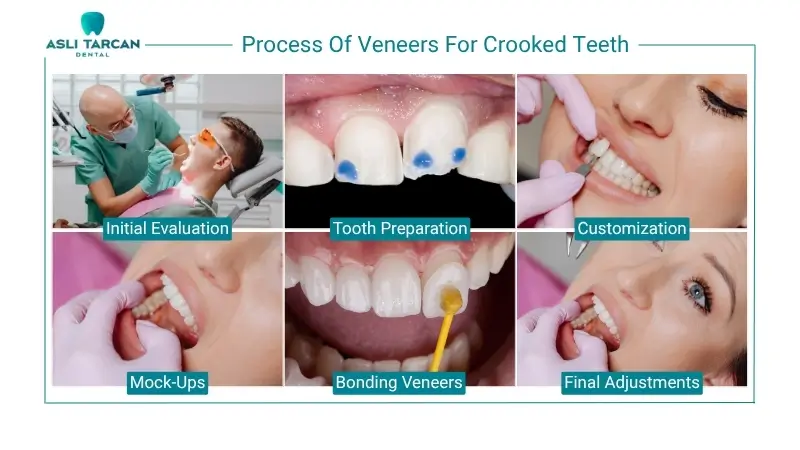
- Initial Evaluation: You visit the dentist’s clinic, and your teeth and health are evaluated to check if you’re a good candidate for the procedure. The X-rays and impressions may be taken during the evaluation.
- Consultation: The dentist consults with you by discussing the smile goals, potential risks, expectations and your desired smile. Be honest with them and answer their questions accurately, as they’ll determine if you’re a good fit for the procedure or not based on the consultation.
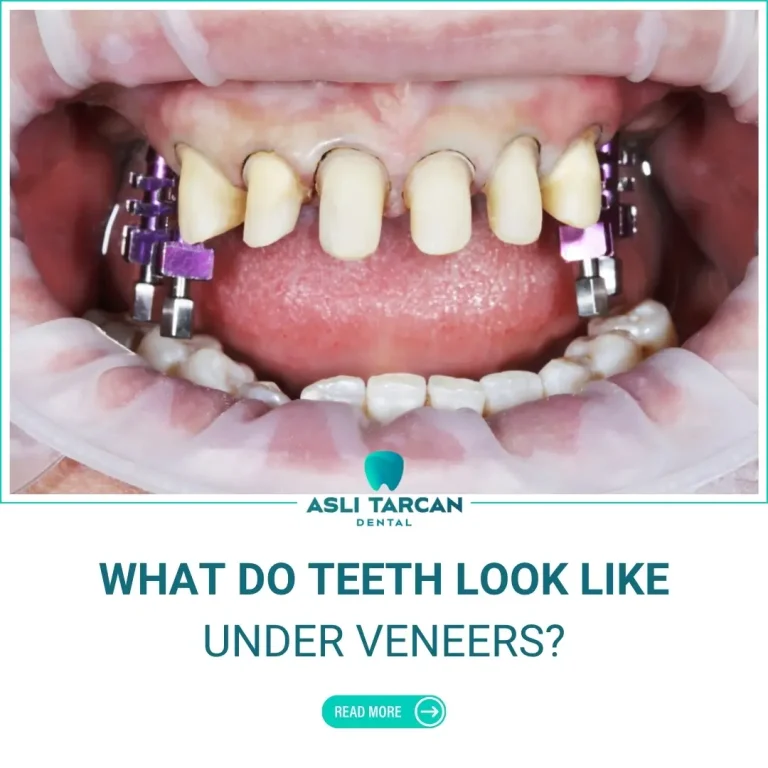
- Tooth Preparation: After the consultation, the tooth preparation starts, which involves removing the thin layer of enamel to make space for veneers and avoid the bulkiness.
- Impressions & Customization: Dentists then take the impressions of your teeth and send them to the lab if the on-site facility isn’t available. These impressions are used to make the customized veneers for your teeth based on natural tooth color, shape and size.
- Mock-Ups / Preview: Not all, but some dentists offer a digital or a temporary model of the transformed teeth so that you can set realistic expectations.
- Bonding Veneers: When the veneers are ready, they’re bonded permanently to your teeth with a strong adhesive. They’re then adjusted for a seamless and perfect fit.
- Final Adjustments: After they’re placed, the dentist makes the minor refinements, ensuring they’re comfortable and fit for you. You may also need a follow-up visit to confirm that the veneers fit you and that they’re not causing issues.
What Can You Expect After Veneers?
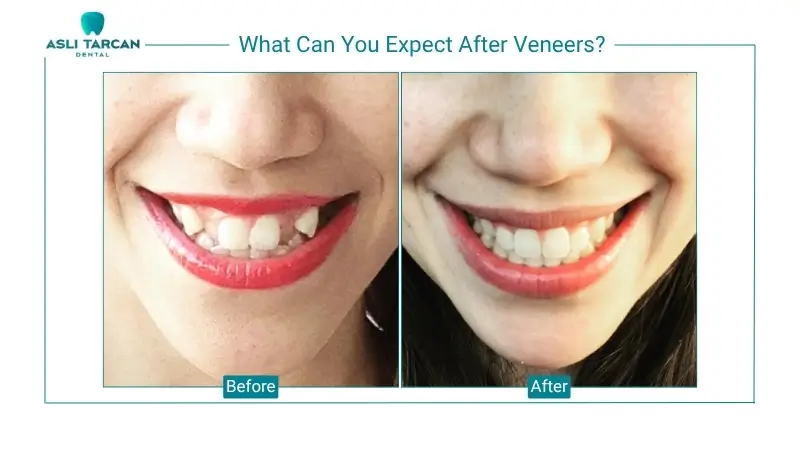
After the veneers, you’ll see a drastic change in your crooked teeth. You’ll feel that your teeth are straighter, brighter and symmetrical. It will give you a confidence boost that will allow you to flaunt your beautiful smile, which you once used to hide due to its imperfections.
Should You Get Veneers With Crooked Teeth? Dentist’s Advice
According to dentists, getting veneers with crooked teeth is no harm as long as the misalignment is mild. If it’s severe, the veneers shouldn’t be considered, as they only mask the imperfections but don’t fix them.
If you have severe misalignment, gaps, overlapping or bite issues, you should choose other alternatives to veneers for crooked teeth, such as braces, aligners and crowns.
Veneers are a cosmetic treatment that is used only to make your teeth look perfect and natural-looking by hiding the imperfections. To fix the underlying issues of the crookedness, you should consider the alternatives.
Risks and Considerations of Veneers With Crooked Teeth
Veneers are irreversible, especially when they’re porcelain veneers. They involve removing the enamel that can’t be replaced and cause sensitivity in around 30% of people. 5 to 15% of the veneers may chip or crack, while 15% is the risk of minor gum inflammation.
Furthermore, the chances of pulp injury are around 1 to 5% and 20% of shade mismatch. You should consider the factors, like the durability of the composite veneers, which is usually around 5 to 7 years. Porcelain veneers can last from 10 to 15 years with good care.
Alternatives To Veneers For Crooked Teeth
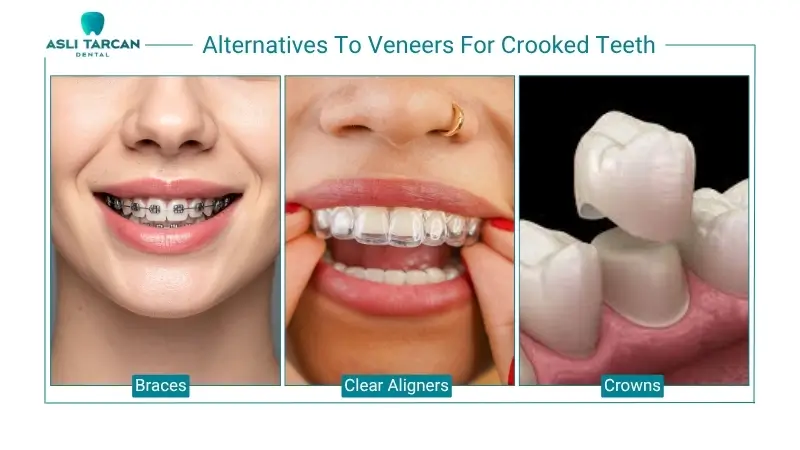
The best alternatives to veneers for misaligned teeth include braces, clear aligners and crowns, which address the underlying cause of the issue.
Braces
Braces move teeth into correct alignment by applying steady pressure. They’re highly effective for mild, moderate and severe crookedness. They can also correct bite problems like overbite, underbite or crossbite.
It’s a permanent solution to the crookedness of the teeth that may take some time but offers long-lasting and stable results.
Clear Aligners
Clear aligners are nearly invisible trays that are placed over your teeth, gradually shifting them into the right place. They’re more comfortable and removable compared to braces and veneers. They’re best for mild to moderate misalignments. However, they require discipline to wear for 20 to 22 hours a day for the best results.
Crowns
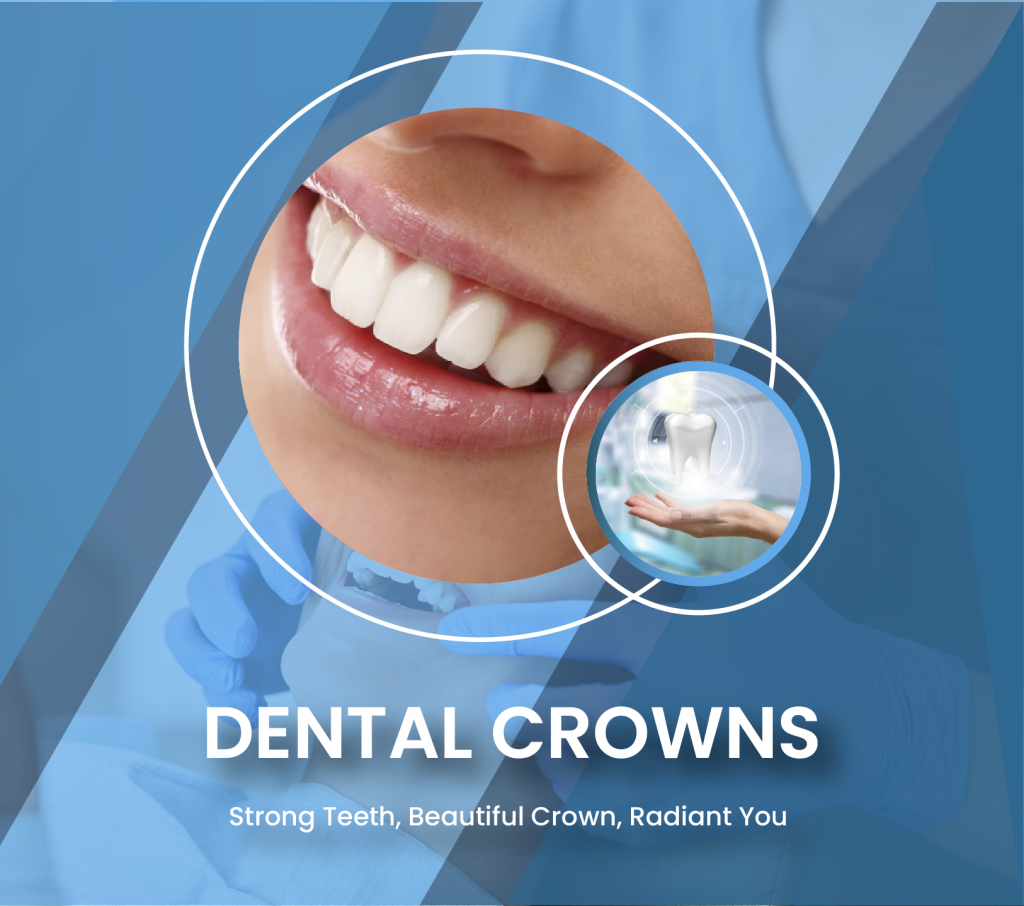
Crowns are like veneers, but instead of covering only the front part, they cover the full tooth, supporting its function and its shape. They improve both appearance and the strength of weak teeth, fixing the imperfection issues gradually.
They’re ideal for damaged, misshapen or severely misaligned teeth. It’s more invasive than veneers as it involves shaving down the tooth. So, consider it only with your dentist’s choice.
Asli Tarcan Dental Clinic: Your Trusted Dental Experts
Can you get veneers with crooked teeth? Yes, but only for the mild misalignments and the issues, as the veneers only mask the imperfections; they don’t fix them. For the severe misalignments, chips, gaps, overlapping or bite issues, you should consider clear aligners, braces and crowns.
These address the underlying issues of the misalignment of the teeth, fixing them permanently and gradually. The best would be to talk to your dentist, get your teeth assessed and then follow what they say.
If you want to get dental implants, crowns, veneers of all types and other modern smile makeovers from licensed dentists in the Turkey, contact Asli Tarcan Dental Clinic today.
FAQS
Can teeth be too crooked for veneers?
Yes, when teeth are very crooked, veneers won’t work, and orthodontic treatments are needed first.
What teeth cannot get veneers?
Teeth with weak enamel, severe decay, heavy misalignment or poor health aren’t fit for veneers.
Do you need to straighten teeth before veneers?
Yes, but only for severe misalignment; mildly crooked teeth can be directly masked with veneers.