
Composite Veneers Vs. Porcelain Veneers
Veneers are the most used and the popular treatment for chipped, cracked, damaged, or discolored teeth. It’s considered a fast, less invasive dental solution. However, composite veneers vs porcelain veneers, which one to choose?
It actually depends on your preferences, aesthetic goals, time, and budget. The composite veneers tend to be way more affordable, reversible, and faster to get placed in the same appointment.
They last from 5 to 7 years. On the other hand, porcelain veneers tend to be quite expensive, but they’re durable, lasting from 10 to 15 years, and resistant to stains and damage. Plus, they require tooth preparation that involves removing enamel.
Let’s compare both veneer types in detail and decide on the one that meets your requirements, comes within your budget, and is safe for you.
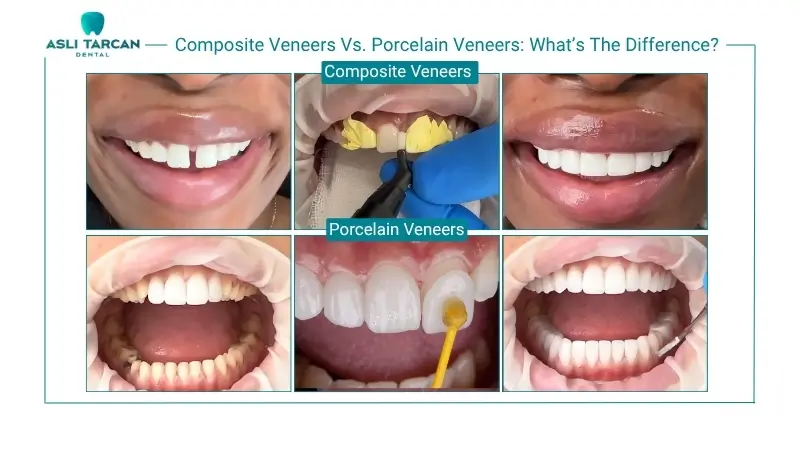
Composite Veneers Vs. Porcelain Veneers: What’s The Difference?
Veneers are custom-made shells bonded to the front or back side of your teeth, hiding the chips, gaps, discoloration, and cracks. Composite and porcelain veneers are the two main types used the most.
To decide a veneer type that gives you the desired results, is safe, perfect for your problem and also comes into your budget, we need to compare composite veneers vs porcelain veneers. Let’s do that.
Composite Veneers
Composite veneers are created with composite resins and are one of the most used veneer types. They can be direct, which means they are sculpted in the same visit, or they can be indirect, which means they get made in the lab first and bonded later.
The composite is usually reversible and doesn’t require much enamel removal when removed. They also require less tooth preparation compared to porcelain veneers.
Porcelain Veneers
The porcelain veneers are created with the porcelain shells fabricated in a lab. Porcelain is a stronger and more durable material that is resistant to stains and damage as well.
It maintains a stable color and mimics the look and feel of natural enamel more closely. Porcelain veneers are irreversible and hence, they’re permanently bonded to your teeth.
If in the future you make up your mind to remove them, they must be cut off.
See Also: Veneers vs Lumineers
Application Procedures
The application procedures are also different.
- Composite
The composite veneer application procedure starts with a consultation in which the dentist checks your teeth, assesses their condition to determine if your teeth are good enough for the treatment. In the direct composite veneers, resin is applied and sculpted directly on the teeth in one visit.
For indirect composite veneers, impressions are taken and then sent to the lab to be designed based on the shape, size, and structure of your teeth. Then, they’re bonded to your teeth on the next visit. A special light is used to harden the resin.
- Porcelain
On the other hand, the porcelain veneers are only indirect, and their procedure starts with a consultation. The teeth are assessed, impressions taken, and then sent to the lab to design suitable and personalized veneers for your teeth.
Temporary veneers may be placed while you wait for the permanent ones. In the final step, probably after 2 weeks, the veneers are bonded to your teeth and adjusted for fit, color, and shape.
Durability
Porcelain is significantly more durable than the composite veneers because it’s a furnace-fired material, which is extremely hard. It’s resistant to damage and the color as well, which makes it look brighter and whiter for a long time while also being safe from cracks and chips.
While the composite is a soft glass silica material hardened by an ultraviolet light, it is less durable than porcelain and is prone to staining, damaging, cracking or chipping. This is the reason the porcelain tends to last for 10 to 15 years, while the composite lasts for 5 to 7 years with good care.
See Also: Composite Veneers After 5 Years
Time
Each procedure’s duration varies, depending on the technique used. The direct composite veneers treatment is shorter and completed in the first visit, while the indirect may take 2 days.
While the porcelain takes way longer, as it’s indirect and takes around 2 weeks for preparation, lab work, and bonding.
Cost
The composite veneers tend to be half the cost of porcelain veneers. They cost around $200 to $300 per tooth. While the porcelain is ranging from $150 to $200 or more per tooth.
Look & Reversibility
Both veneers give a natural-looking smile. However, the porcelain is irreversible as it’s permanent. If you want to remove it later on, it will involve removing enamel, which is invasive. While the composite veneers are reversible and they are less invasive when you want to reverse them.
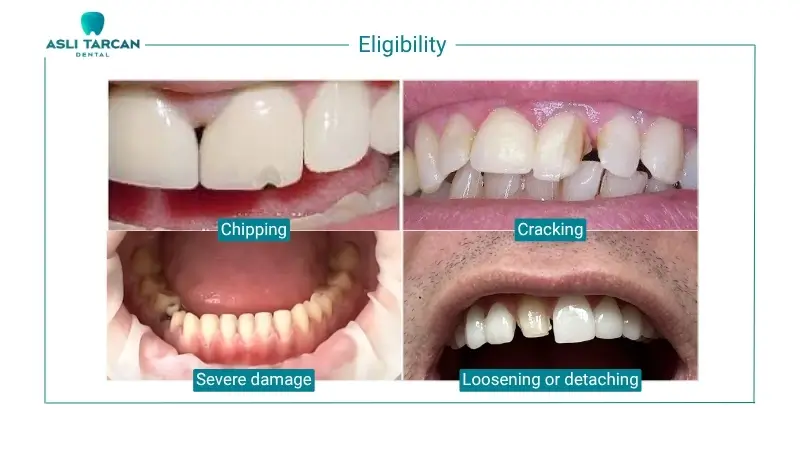
Eligibility
Anyone who has issues like chips, fractures, discoloration, or severe damage can get porcelain veneers. But they must have overall good oral health, healthy and strong enamel for bonding. On the other hand, the composite veneers work well for short teeth, minor chips, fractures, and misshapen teeth.
Having good oral health and big and strong enough natural teeth is crucial for better bonding and a natural-looking smile. In both of the treatments, the dentist checks habits like teeth grinding, as it can disrupt both treatments.
Pros And Cons Of Porcelain Veneers Vs Composite Veneers
These are the pros and cons of composite and porcelain veneers.
| Type | Pros | Cons |
| Composite Veneers | Much cheaper than porcelain (about half the cost) Can often be done in one visit (same day) Quick and less invasive treatment – Reversible since little enamel is removed It can look natural after polishing. | Lasts only 5–7 years on average – More likely to stain over time (coffee, tea, wine, etc.) Weaker than porcelain, it can chip more easily Needs more maintenance and polishing Doesn’t look as realistic as porcelain |
| Porcelain Veneers | Very strong and durable (lasts 10–15 years) Looks most natural, close to real enamel Highly resistant to stains and chips – Works better for severe issues (discoloration, gaps, worn enamel) Long-term value despite higher upfront cost | Requires enamel removal, so not reversible Procedure takes longer (lab work, multiple visits) Repairs are harder, slower, and more costly May need temporary veneers during the process |
Composite Veneers Vs Porcelain Veneers: Which One To Choose
Porcelain vs. composite veneers: which one should you choose? To determine that, you need to consider the factors like the cost and the long-term value, tooth preparation, maintenance, and care.
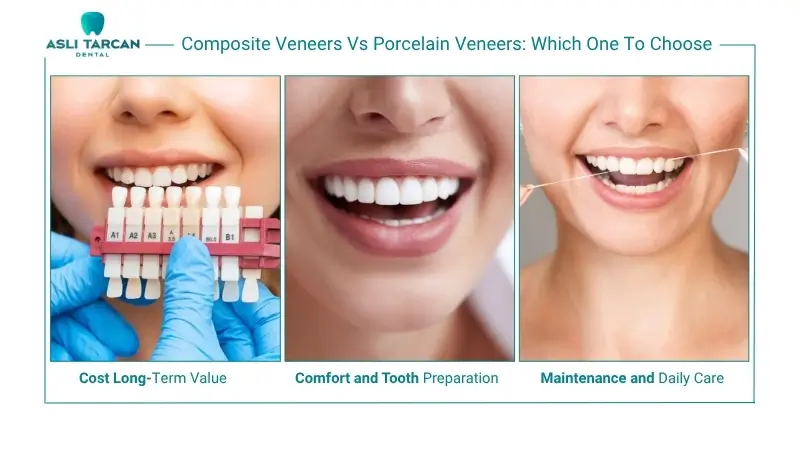
Cost Long-Term Value
The porcelain veneers offer long-term value as they stay with you for decades and also stay brighter and whiter for longer. They’re more expensive upfront due to the complex lab work and the advanced skills.
The composite veneers, on the other hand, may seem more affordable, but they may require frequent repairs or replacements, automatically costing you way more in the long run.
People on a budget and who are okay with occasional repairs (rare with proper care), composite veneers are your way to go.
If you have severely damaged, cracked, chipped, or discolored teeth and you want to keep them looking good for a long time, and you can also pay more, go for the porcelain veneers.
Comfort and Tooth Preparation
Both are comfortable after placement. The composite veneers usually require less enamel removal, so the natural tooth stays mostly intact. While the porcelain veneers often need more reshaping of the tooth, this makes the treatment permanent. If you want to preserve your natural teeth, the composite veneers are a gentler choice.
See Also: Bad Veneers vs Good Veneers
Maintenance and Daily Care
You need to care for both veneer types by proper brushing, flossing and attending regular dental visits for the veneers to last longer.
Bad habits like chewing on hard objects or using teeth as tools can damage either type. Porcelain resists stains better than composite, but still, avoiding stain-causing foods and drinks is preferable.
The composite veneers may require frequent polishing or touchups to maintain a natural look.
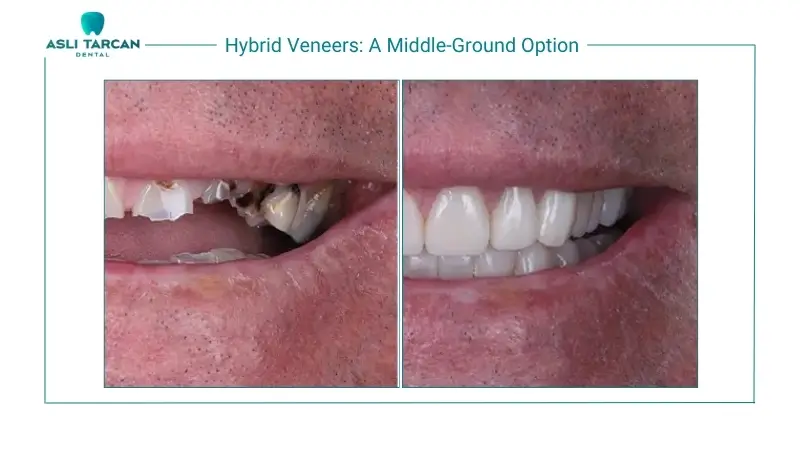
Hybrid Veneers: A Middle-Ground Option
If you’re confused about choosing either, you can go for both, which makes them hybrid veneers. In it, you get the qualities of porcelain and composite veneers.
It’s a good choice for people who want to get natural-looking teeth provided by the composite veneers and the durability that porcelain provides.
Furthermore, the condition of the teeth, health condition, and the tooth requirements will also determine if this is right for you.
The hybrid veneers are made in a dental lab using digital design for precise, symmetrical results. They give you an aesthetic and brighter, natural-looking smile.
These veneers aren’t suitable for everyone; you must consult with your dentist so they can suggest you better.
See Also: Does Freddie Freeman have Veneers?

Asli Tarcan Clinic: Brighter Smile With Modern Dental Solutions
Composite veneers vs porcelain veneers: what are the differences? The composite veneers tend to be more affordable, reversible, and natural-looking, but with less durability.
They’re less invasive as they require less enamel removal. The porcelain veneers tend to be more expensive, but they offer great durability, a brighter looking smile, and it’s a permanent solution.
However, they tend to be more invasive as they require more enamel removal, and they can’t be reversed.
The choice of choosing either boils down to the condition of your teeth, your budget, your health condition, tooth health, and how severe the imperfections are. You must consult with your dentist to choose the right treatment.
If you want to get advanced dental implants or composite or porcelain veneer placement in the US, contact Asli Tarcan Dental Clinic today.
FAQS
What are the disadvantages of composite veneers?
The disadvantages of the composite veneers are that they’re less durable, stain more easily, and may need more touchups, polishing, and replacement.
What happens to composite veneers after 5 years?
After 5 years, they may chip, discolor, or wear down, and you may need to polish, repair, or replace them.
Do composite veneers look as good as porcelain?
Yes, they look good and natural, but the porcelain gives a brighter and more natural enamel-like finish.