
Veneers vs Lumineers: Which Is Right for Your Perfect Smile?
Veneers have become a go-to dental treatment to get a flawless smile. However, a huge debate goes on around the Veneers vs Lumineers. Which one should you go for? Traditional veneers are custom-made shells bonded to the front surface of the teeth to hide all the irregularities.
Lumineers, on the other hand, are a specific brand that is known for making ultra-thin, contact-less, and minimal-to-non-prep veneers.
Both are used to transform your smile, but they have differences. The veneers are permanent, last longer, and work best for severe dental issues. The Lumineers tend to break easily and can be a great option for people considering reversible veneers.
Veneer vs Lumineers: Which one is best for me?
Lumineers are less expensive, not so durable, require little to no tooth preparation, but they may require more replacements. Veneers are permanent and lasting, may cost more, but they last for 10-20 years or more with good care.
What Are Veneers?
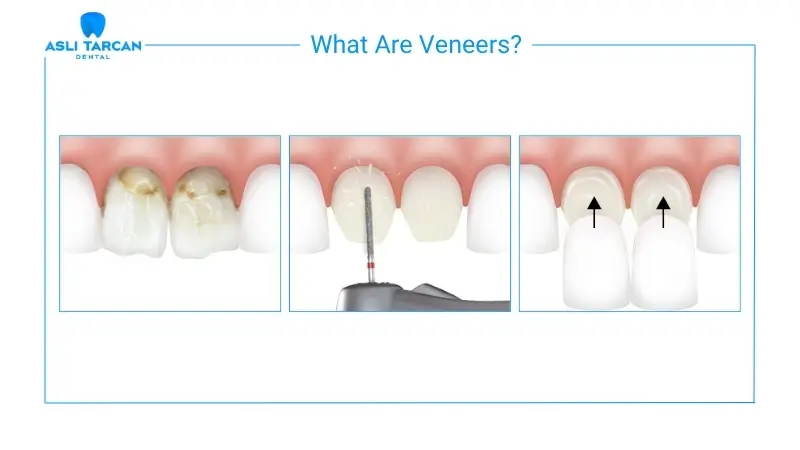
Veneers are thin shells made from porcelain or composite resin that stick to the front of your teeth to make them look better. They can change the color, shape, size, and alignment all at once. Stains, cracks, gaps, or chips don’t stand a chance.
Most veneers stay forever because some enamel has to be shaved off, but composite ones can sometimes be reversed since they need less trimming.
The two main types of veneers are porcelain and composite veneers, each with its own strengths.
What Are Lumineers?
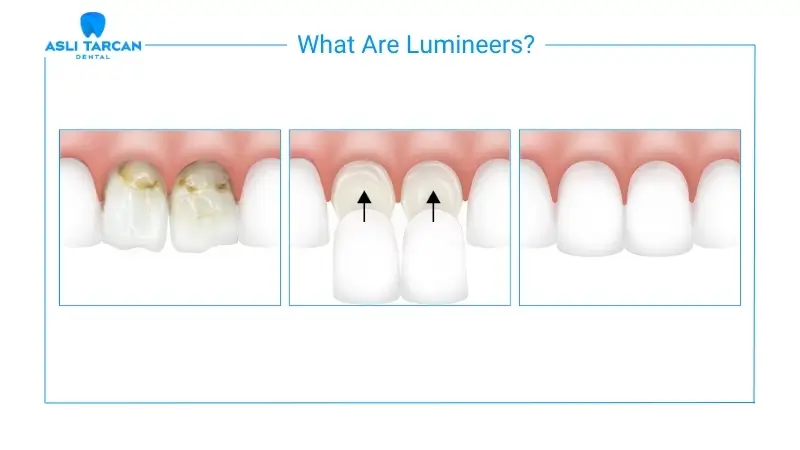
Lumineers is a brand that customizes ultra-thin, minimal-prep veneers. They make porcelain veneers with some extra qualities that ensure minimal tooth structure is trimmed. The role of Lumineers is the same as veneers. They also transform your smile and fix its flaws, such as stains, shape issues, or alignment issues.
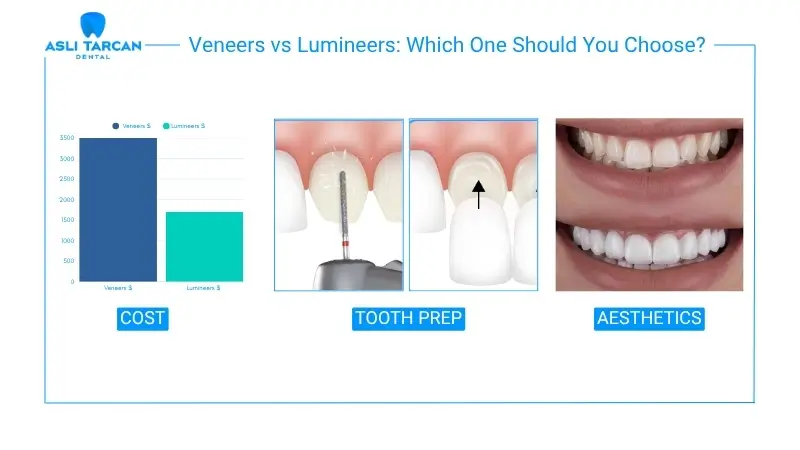
Veneers vs Lumineers: Which One Should You Choose?
Many people are confused about choosing between Lumineers vs veneers. Some people confuse them to be the same, while some wonder which one is better for them.
Let’s learn in detail about the differences between Lumineers and veneers, their pros and cons, and which one is the best option for you that meets your requirements.
Cost
Lumineers cost less at first, usually $800 to $1,700 per tooth, because they need very little tooth prep, lab work, or fuss. Veneers cost more as they are permanent, made from stronger materials, and require more detailed prep and lab work.
The price can land anywhere from $300 to $3,500 per tooth, depending on where you are, the dentist’s experience, the number of teeth, and the consultation.
See Also: Emax Veneers in Turkey
Tooth Prep
The main difference between the Lumineers and the veneers is their tooth enamel trimming. To make room for the veneers and ensure they fit well, dentists usually remove 0.5 to 0.7mm of enamel from the teeth, which may be more or less, depending on the case.
On the other hand, Lumineers require minimal to no tooth enamel removal as they tend to be used only for mild cases. However, if the patient has severe dental issues and wants to get Lumineers, the dentist may trim the tooth enamel slightly more than usual.
Aesthetics
As per the aesthetics, both of the veneer types give you a fully transformed and brighter-looking smile. They fix all of the issues, such as stains, discoloration, misalignment, or cracks. However, the difference is in the severity of the issues they can handle.
The Lumineers are made of thinner material compared to the traditional veneers, and hence, they can only be used for mild cases. While veneers are high-quality and long-lasting, they can be used for both severe and mild cases.
Longevity
Veneers are known to be long-lasting, as mentioned earlier. They are created from high-quality, non-porous materials that make them stay longer with you. The lifespans may depend on the type of veneers you get.
Research has shown that porcelain veneers have a 93% to 95% survival rate for up to 10 to 15 years. Composite veneers typically last around 5 to 7 years.
As per the lifespan of the Lumineers, they’re made of ultra-thin proprietary porcelain, which typically lasts 5 to 10 years. With good care, you can make it last up to 15 years.
However, since they’re too thin, they’re more prone to fracture and chipping compared to veneers, which are thicker and resistant to stains and damage.
See Also: Composite Veneers After 5 Years
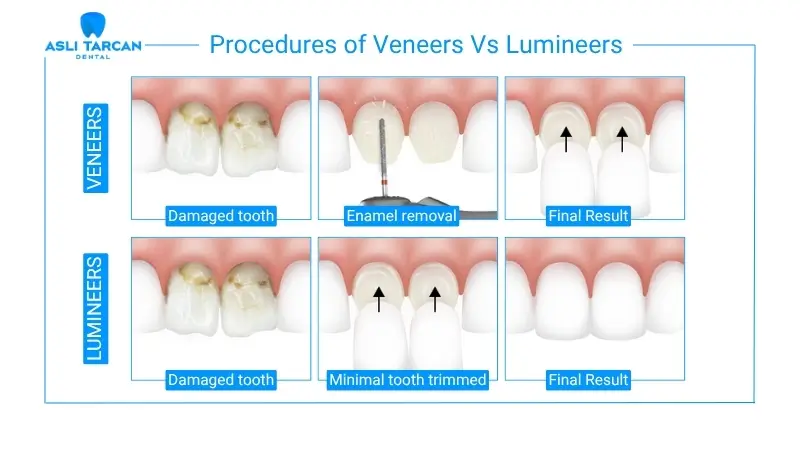
Procedures of Veneers Vs Lumineers
To get either of the veneers, you need to visit a dentist who will consult with you, assess the condition of your teeth, and confirm if you’re ready for the treatment. In the case of veneers, 2 to 3 appointments may be needed, including the consultation, preparation, and bonding.
The veneers may take some time to get designed. Until then, the dentist bonds temporary veneers to your teeth. After some days, the permanent veneers are bonded to your teeth.
To get the Lumineers, you may have to visit the dentist twice. Firstly, for consultation and then secondly, for bonding and the impressions.
They require little to no enamel prep, which means the process is quicker compared to veneers. Your teeth are assessed, the Lumineers are designed for you, and then bonded to your teeth.
Use Cases
Use cases of Lumineers and veneers are nearly the same. But veneers can fix severe stains or dark stains, large gaps or misalignment, and significant issues with the teeth’s shape. Lumineers, on the other hand, can work great for mild staining, minor shape tweaks, misalignment, or other irregularities
Lumineers Vs Veneers: Pros and Cons
To further give you clarity on whether you should choose Lumineers or veneers, these are the pros and cons of both.
| Porcelain Veneers | Lumineers | |
| Pros | Long-lasting (10–15+ years) Excellent at masking stains, chips, and cracks Proven, predictable results Strong, stain-resistant porcelain | Minimal or no tooth prep Preserves natural tooth structure Slightly lower initial cost Often fewer appointments |
| Cons | Permanent enamel removal Higher upfront cost Temporary veneers needed | Shorter lifespan (5–10 years typical) Less effective on severe stains Limited for major smile changes “No-prep” may still require minor tooth work |
Challenges & Solutions of Lumineers and Veneers
These are the challenges of veneers and Lumineers, and how you will tackle each.
| Challenge | Veneers (Porcelain & Composite) Approach | Lumineers Approach |
| Tooth Sensitivity | Use gentle desensitizing toothpaste and in-office fluoride treatments to ease discomfort | Usually mild; the same preventive care applies for comfort |
| Loss of Natural Tooth | Opt for thinner veneers or composite options to reduce enamel removal | Ultra-thin design keeps most of the natural tooth intact |
| Chips or Cracks | Protect teeth with night guards and avoid biting hard objects | Follow similar precautions and maintain regular dental check-ups |
| Cost Concerns | Consider financing plans or a composite “starter” veneer to spread out costs | Flexible payment options and long-term benefits make it worth it |
| Matching Tooth Color | Digital shade guides and trial mock-ups help achieve the perfect match | Careful digital planning ensures a natural, translucent look |
Veneers Vs Lumineers: Which One Should Be Your Choice?
Which option you choose boils down to your requirements and preferences. If you want to spend less initially but are okay with frequent replacements or repairs and want a solution with less tooth enamel removal, you can go for the Lumineers. Remember, they’re not for severe dental issues.
On the other hand, if you can spend a little more initially but get a dental transformation that stays with you up to 20 years or even a lifetime with good care, go for the veneers. They’re great for severe misalignment, staining, or shape issues.
The best would be to talk to your dentist and have them recommend a better solution based on your condition and your requirements.
Important Questions To Ask a Dentist About Lumineers Vs Veneers
Your dentist can help you decide better between veneers vs Lumineers as they can assess the condition of your teeth, your requirements, and also discuss your goals with you. These are some important questions that you can ask your dentist to learn more about both procedures, so that it’s easier for you to make an informed decision.
- What are my alternatives to veneers or Lumineers?
- How much tooth alteration will the procedure require?
- How do I prevent stains, chips, or other damage?
- What special care is needed to maintain them?
- How frequently should I schedule follow-up visits?
- What warning signals should I look for in my teeth and gums?
- What will the overall cost be, and is financing or insurance available?

Schedule A Free Consultation At Asli Tarcan Dental Clinic
Chips, cracks, gaps, or staining take away the beauty of your smile and make you hide it as you’re too embarrassed to show it off. Consider the veneers, which give you a permanent smile transformation in which all of these irregularities are fixed.
This solution makes you ready to show off your beautiful, flawless, and brighter smile and walk with confidence. Contact Asli Tarcan Dental Clinic today to get veneers from our board-certified plastic surgeons in Turkey.
Conclusion
Veneers vs Lumineers: Which one should you choose? Lumineers are ultra-thin, contact-less veneers that require minimal to no tooth removal for bonding. They’re less expensive but may require replacements as they’re not so durable. Veneers stick around for a long time, usually 5 to 15 years or even longer if you take care of them.
They’re made from strong, high-quality materials, so they don’t just last, they also shine and look natural on your teeth.
However, they may require more tooth removal compared to the Lumineers. They can also be a little more expensive initially, but since they’re going to stay permanent, the cost is worth it.
Veneers can be great for severe issues, while Lumineers can work great for mild ones. When choosing either, consider your requirements, the severity of the issues, your budget, if you’re okay with tooth removal, and whether you want to reverse the solution.
If you make up your mind about getting veneers, choose Asli Tarcan Dental Clinic for getting it done by the qualified and top-rated surgeons in Turkey.
FAQS
Which is better, veneers or Lumineers?
Which one is better comes down to what you need, your budget, and whether you want a permanent fix. Veneers last longer, look more natural, and are stronger, but they do need more tooth prep. Lumineers cost less upfront, take off less enamel, but they don’t last as long as veneers.
Do celebrities get veneers or Lumineers?
It’s subjective and may vary based on requirements. Since Lumineers are ultra-thin, some celebrities may prioritize them over veneers. While some may choose veneers for their long-lasting results and natural-looking smile.
How long do Lumineers teeth last?
How long they last comes down to care. Usually, they stick around for 10 to 15 years, but being ultra-thin makes them more likely to chip or crack.
What are the disadvantages of Lumineers?
Since they’re made from ultra-thin material, they can chip, crack, or get stained. That means you might need to replace them more often.
How much do dental Lumineers cost?
Cost may vary depending on the experience of the dentist, your location, the number of teeth you want to cover, and the consultation. You should expect to spend around $800 to $1,700 per tooth.
Do Lumineers require enamel removal?
They require little to no tooth removal, depending on the severity of the teeth issues the patient has.
Can you go back to normal teeth after Lumineers?
Yes, you can go back to normal teeth after Lumineers, as they require very minimal or sometimes no tooth removal.