
Can You Get Cavities With Veneers or Are Teeth Protected?
33% of Americans aren’t satisfied with their smile due to their teeth that usually have flaws like chips, gaps, discoloration and misalignment due to genetics, drinking alcohol or having any diseases.
However, veneers, particularly made of porcelain, are a common dental solution to get perfect teeth for Americans. Can you get cavities with veneers, or are teeth protected? Every person considering or already having veneers asks this question.
Veneers themselves don’t get cavities as they’re strong enough to fight off tooth decay and are not affected by it. But your teeth still get cavities with veneers, as veneers only cover the front part of your teeth, leaving the back, top and interdental areas exposed to bacteria that can form cavities. You can prevent it, though, with proper oral hygiene.
See Also: Veneer Breath
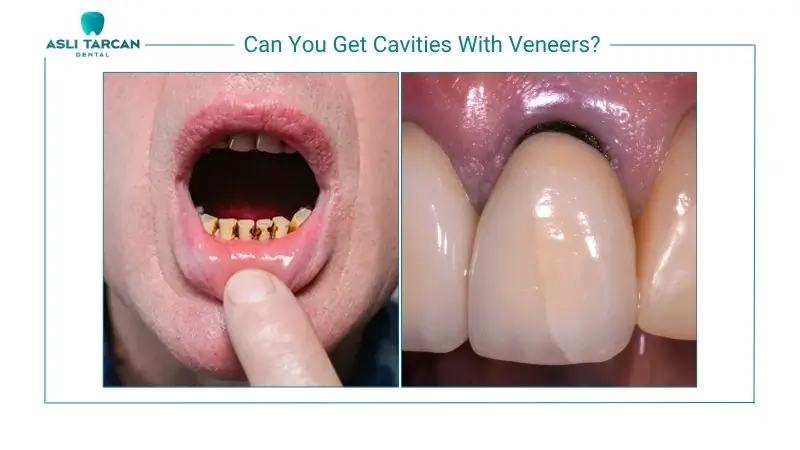
Can You Get Cavities With Veneers?
Yes can still get cavities as the veneers don’t fully cover the tooth. They only cover the front surface of the teeth, leaving the top, back and the interdental areas exposed to the bacteria, gaps and discoloration.
The food can gather around or beneath veneers, producing bacteria and acids, damaging the natural enamel and causing cavities.
See Also: What Do Teeth Look Like Under Veneers?
Causes of Cavities With Veneers
Cavities after veneers can happen due to causes like the veneers not covering the full tooth, tooth decay, and poor oral hygiene.
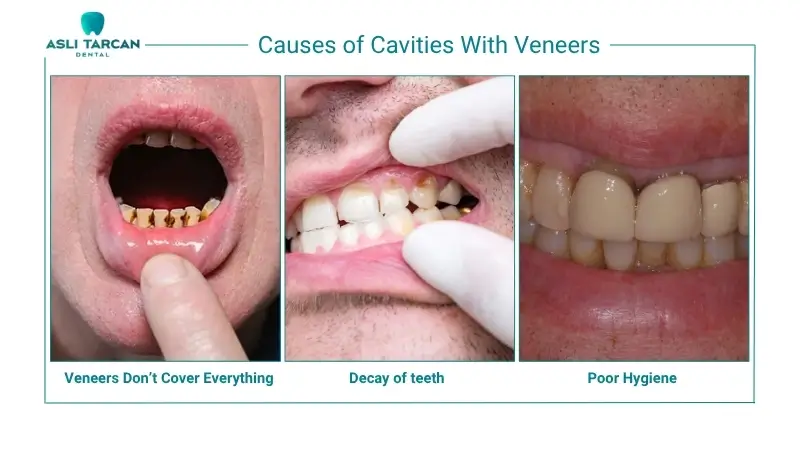
Veneers Don’t Cover Everything
As stated earlier, the veneers are placed over the front part of your teeth, not the back, top or interdental areas. So, these areas can still get cavities due to collecting plaque or bacteria.
Decay
As bacteria slip between the teeth and veneers, cavities can slowly develop. If it goes unnoticed and untreated, it can cause permanent damage.
Poor Hygiene
Some people don’t maintain good oral hygiene after getting the veneers, which is a major cause of cavities. The veneers don’t replace brushing or flossing.
Proper oral hygiene is still required to remove the plaque build-up around the veneer edges, prevent the food from getting collected and also keep the veneers looking good.
See Also: Can You Eat With Pop On Veneers?
Do The Veneers Get Cavities?
No, they don’t get the cavities as they’re made of the strong ceramic material that can easily handle the bacteria or the cavities.
The veneers themselves don’t get cavities as they’re durable and also stain-resistant. But the teeth beneath them can develop cavities.
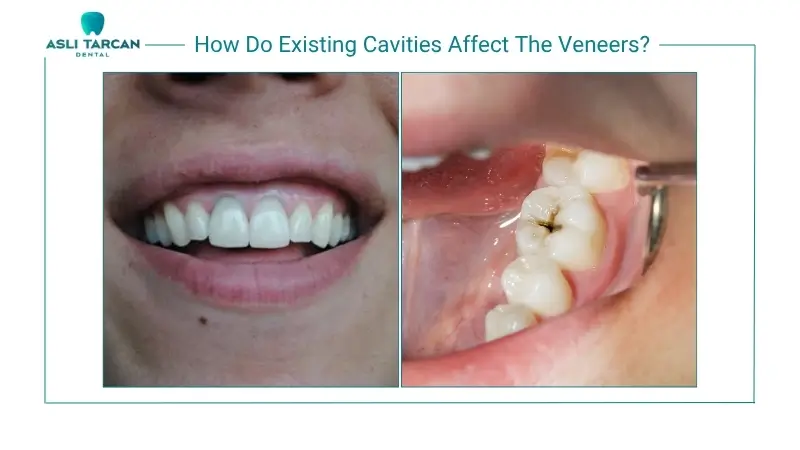
How Do Existing Cavities Affect The Veneers?
When you get the veneers, the existing cavities get covered underneath and keep spreading and getting worse.
The cavities keep getting bigger and more dangerous over time, even when the veneers have covered them. Also, it’s much more difficult to treat the cavities under the veneers than without the veneers.
Therefore, if you have cavities, you must treat them first before you get the veneers, so that you don’t have any severe dental issues.
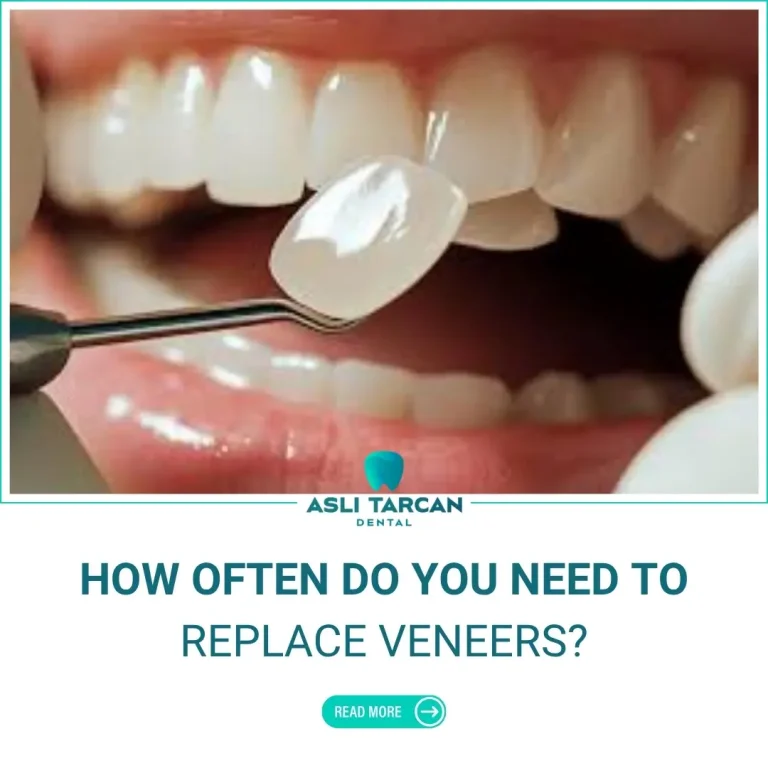
See Also: Do You Have To Replace Veneers?
What Happens When A Cavity Forms Under a Veneer?
If the cavity forms beneath the veneers, it may require removal. Then, the cavity will be treated with suitable dental treatments.
The tooth decay will be cleaned and restored before placing a new veneer. In severe cases, alternative treatments may be needed for tooth health.
How To Prevent Cavities With Veneers?
It’s possible to prevent cavities with veneers. All you need to do is brush your teeth twice a day, floss and use mouthwash at least once a day, drink plenty of water, eat a balanced diet and also visit your dentist regularly.
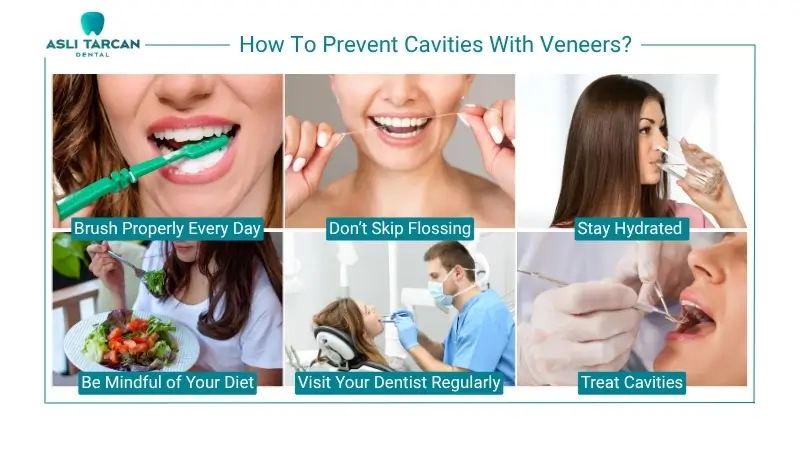
Brush Properly Every Day
Make sure that even if you’re wearing the veneers, you don’t skip brushing. You need to brush twice daily for at least two minutes. Use the fluoride toothpaste to protect the enamel.
The best times to brush your teeth are in the morning and after your final meal at night so that the food stains, buildup, and bacteria don’t remain on your teeth.
Don’t Skip Flossing & Mouthwash
The brush can’t reach all the parts of your mouth, and this is why you should also floss once a day. It reaches all the remaining parts, removing bacteria, flushing out leftover food particles, and germs.
Stay Hydrated For Oral Health
Dry mouth increases the chances of tooth decay and cavities. So, drink more water to keep your mouth moist.
Quit habits like tobacco products, smoking or vaping as they make your mouth dry. Drink plenty of water to prevent dry mouth and boost saliva flow.
Be Mindful of Your Diet
Veneers can be damaged by sugary, starchy, or too-hard snacks. Avoid foods that are too sticky or hard, as they can damage the veneers. Be sure to follow a balanced diet to keep your enamel and veneers in good condition.
Visit Your Dentist Regularly
Having your veneers and teeth professionally cleaned every six months keeps them healthy. Additionally, your dentist can detect cavities early and fix them before they become major problems.
See Also: Can You Get Veneers With Crooked Teeth?
Treat Cavities and Ensure Proper Veneer Fit
Make sure that if you have cavities already, you get them treated first before getting the veneers. Ensure veneers fit properly on your teeth.
If the veneers feel too loose and they move, let your dentist know and have them refitted, as loose veneers can give an easy way into the bacteria.
See Also: Whitening Stripes for Veneers

Asli Tarcan Dental Clinic: Perfect Smiles, Lasting Protection
Can you get cavities with veneers? Yes, you can as the veneers cover only the front surface of the teeth, leaving the back, top and the interdental areas exposed to the bacteria and the tooth decay. Tooth decay can cause a cavity over time.
Furthermore, poor dental hygiene is another cause of cavities after veneers, which includes not brushing the teeth every day, flossing, and mouthwashing, as well as not seeing the dentist regularly.
Staying hydrated, maintaining proper oral hygiene, eating a balanced diet, and treating cavities before veneers will prevent cavities after veneers.
Are you struggling with the chipped, cracked, damaged or discoloured teeth and want to fix them with the veneers? Contact Asli Tarcan Clinic today. Our board-certified dentists ensure a proper veneer fit to protect your teeth from decay and cavities.
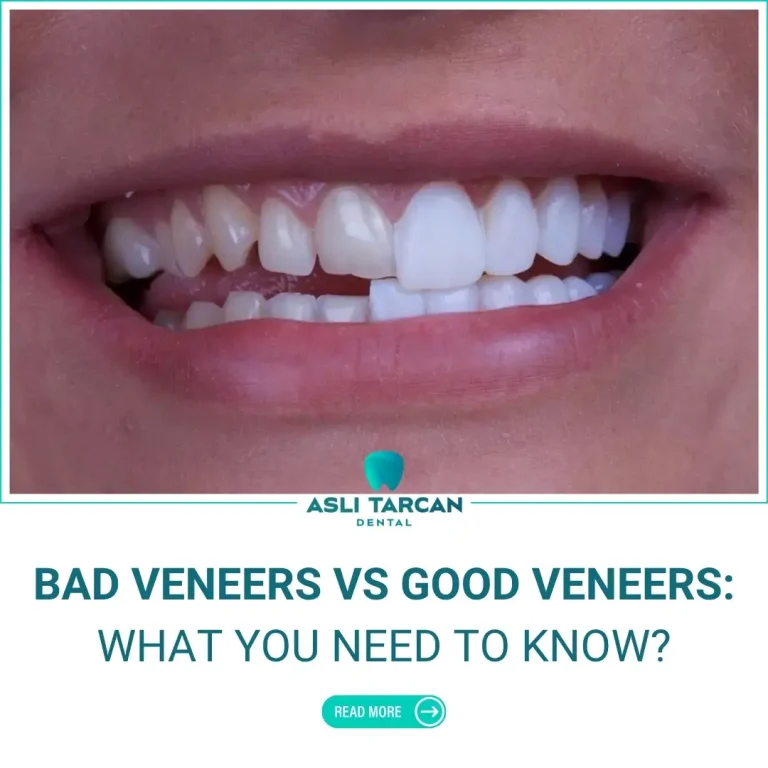
See Also: Bad Veneers vs Good Veneers
FAQs
What happens if you get a cavity with veneers?
If you get a cavity with veneers, you may need to remove them, get the cavity treated and then get the new veneers again.
Can teeth go bad under veneers?
Yes, even with the veneers, your teeth can go bad as they can decay. The veneers don’t cover up the full tooth because of which, the bacteria, germs, and the food buildup can cause dental issues like cavities.
Do veneers get cavities?
No, they don’t get cavities as they’re durable and strong enough to fight off the bacteria and the tooth decay. But, your teeth beneath them can get cavities.