
Veneer Breath: Causes of Bad Smell and How to Fix It
Veneers are considered a reliable and safe dental transformation, which 8% of Americans get. The purpose of them is to mask all the flaws of the teeth and give a natural and beautiful smile. However, some people struggle with veneer breath.
So, why that?When you feel a bad smell after the veneer placement, it’s called veneer breath. The veneers don’t cause the bad odor themselves, nor can they prevent it.
If your mouth smells after the veneers, it’s usually because of the poor fitting of the veneers, which is causing the food or the bacteria to get trapped. The plaque build-up or not following the oral hygiene could also cause it.
See Also: Veneer in Turkey
What are the causes of Veneer Breath?
Veneer breath refers to the persistent smell after the veneers. It’s not caused by the veneers themselves but the poor oral hygiene, plaque build-up or the poorly fitted veneers. You can fix the bad breath by taking care of your oral hygiene, brushing your teeth every day, flossing, and keeping your mouth moist.
What Is Veneer Breath?
Veneer bad breath refers to the persistent foul smell in the mouth even after getting the dental veneers. It can be irritating and a serious concern for the patients, as, despite the veneers, their confidence and personality are still being negatively affected. Many people believe that veneers cause a bad smell or that they fix it after the replacement.
Both cases are wrong as veneers are designed to mask the flaws of your smile, not to fix the bad odor. The causes of the bad breath after the veneers are: Poorly fitted veneers, poor oral hygiene, and plaque build-up. Furthermore, gum diseases, dry mouth, or leftover cement/residue from the veneers can cause an odor.
Causes Of Veneer Breath & Prevention Tips
These are all the causes of foul smell after veneers and how you can prevent each.
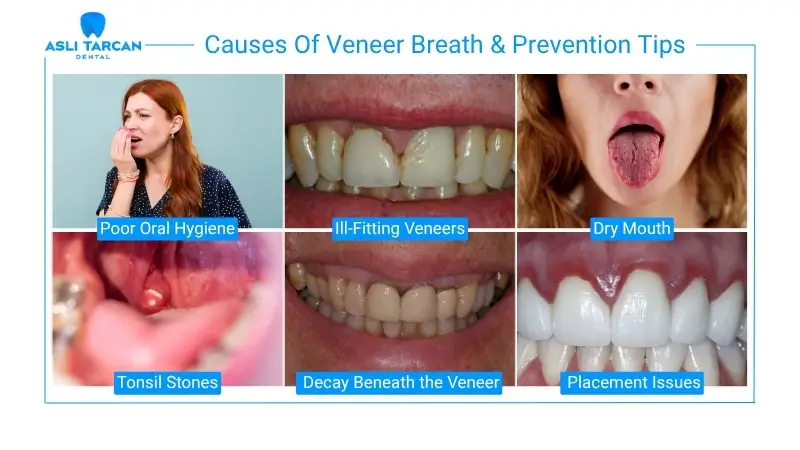
Poor Oral Hygiene
When you don’t brush your teeth, the gums and the tongue aren’t cleaned properly, and the food particles and the bacteria accumulate. That is called plaque formation, which can harden into tartar and lead to not only the odor but also gum disease, cavities, staining, and infection.
Even with wearing the veneers, not taking care of the hygiene may create these issues and a bad smell.
Prevention
- Brush twice daily with fluoride paste
- Clean between teeth every day
- Avoid rinsing right after brushing
- Visit your dentist regularly
Ill-Fitting Veneers
Poorly fitted veneers are a surgical error that can create gaps between teeth and the veneer. The food and the bacteria can get trapped, causing plaque build-up and odor. Furthermore, if the veneers are overly high, they can irritate gums, causing inflammation. If this is the issue, you must talk to your surgeon and get the veneers fitted.
Prevention/Management:
- Check veneers for discomfort or gaps
- Visit a dentist if bad breath or irritation occurs
- Adjust or replace veneers as needed
Dry Mouth
If your mouth is dry, it can lead to food and bacteria accumulation, causing bad breath. The causes of it are usually dehydration, medication, nerve damage and smoking. Having proper moisture in the mouth is important for it to stay clean and for the plaque and bacteria to be away.
Prevention/Management:
- Ensure you’re drinking enough water every day.
- Have sugar-free gum or something sweet to keep the saliva stimulated in the mouth.
- To keep the air fresh, use a humidifier while you’re sleeping.
- Avoid alcohol, caffeine, and tobacco as they can stain and cause a foul smell in the mouth after veneers.
Tonsil Stones
Due to the food, debris, bacteria, and calcium, hard deposits form in the tonsils, which are called tonsil stones. They can cause bad breath and mild discomfort.
They usually dislodge on their own after a few weeks, but if you don’t practice basic dental hygiene or have allergies, they can worsen.
Prevention/Management
- Brush, floss, and clean your tongue every day.
- manage allergies and nasal mucus.
- Gargle using salt water or alcohol-free mouthwash.
- Avoid manual removal; see a GP if needed
Subgingival Margin Placement Issues
Besides poor fitting, poor placement issues can also cause bad odors. If the dentist has placed the veneers below the gum line (Subgingival), it can irritate the gums if not done correctly. It may also cause chronic gum inflammation (Gingivitis or Periodontal disease).
When the gums are inflamed, they release volatile sulphur compounds (VSC) like hydrogen sulphide and methyl mercaptan, which all combine to become a cause of foul breath after veneers.
Prevention/Management:
- Ensure that veneers are appropriately fitted at or just below the gum line.
- Maintain proper gum hygiene.
- Regular dental examinations to monitor gum health.
Tooth Decay Beneath the Veneer
Tooth decay can form under the improperly bonded veneers or if the patient had pre-existing cavities that weren’t treated before the placement. The bacteria in decay produce acids and gases that cause halitosis, which can create bad breath. You won’t notice until it’s severe.
Prevention/Management:
- Ensure teeth are healthy before veneer placement
- Monitor for sensitivity or odor under veneers
- Consult a dentist promptly if problems arise
How To Fix Bad Breath With Veneers?
These are some tips to fix the foul smell after the veneers.

Optimal Oral Hygiene
- Using a soft toothbrush and a fluoride toothpaste, you must clean your teeth at least twice a day.
- Brush in gentle circular motions along the teeth and the gum line.
- Use gentle circular motions along the teeth and the gum line.
- Since the brush can’t reach all the areas of the mouth, and bacteria and food particles may remain, floss daily as well. You can use interdental brushes/picks/water flossers to clean between teeth around the veneers’ margins.
- You can also consider the antimicrobial mouthwash.
Professional Cleanings and Check-Ups
A dentist can clean your veneers and teeth properly. The plaque and the tartar are better removed professionally, as you won’t be able to remove them with dental care, but you can prevent them. Therefore, you must visit your dentist at least twice a year so that they can professionally clean, detect, and prevent odors and the complications with veneers early.
Avoid Foods That Promote Bacterial Growth
Sugar and acidic diets promote bacterial development, resulting in plaque and enamel damage. You should also avoid things that can become stuck in the veneers’ margins, such as popcorn kernels and seeds. A healthy and clean diet guarantees that your veneers stay longer and that you do not experience any unpleasant smell after veneer placement.
Correct Bonding Issues
If the poorly fitted veneers are causing the odor and plaque build-up, then rebonding or replacing veneers can fix gaps and improve breath. Make sure you choose an experienced surgeon so that they will not repeat the mistake.
You can consider Asli Tarcan Dental Clinic, where we have experienced dentists who can fix and adjust the veneers for you or replace them, causing no complications or mistakes.
Treat Underlying Conditions
Issues like gum disease, cavities, or infections must be handled promptly as they can cause further complications. You can get treatments like antimicrobial therapy, scaling, or root planing for these. By treating these conditions, you can get rid of the sources of the bad breath.

Schedule A Free Consultation with Asli Tarcan Today
Veneers can be a great dental solution that can fully transform your smile safely if done by qualified dentists. Consider Asli Tarcan Dental Clinic, where we have experienced dentists with years of experience.
We design the veneers precisely based on the size, structure, color, and shape of your teeth so that they fit properly, cause no complications such as bad odor, and look natural. Contact us today.
Veneer Breath: Here’s What Our Doctors Say About
Veneer’s breath is when there’s a bad odor persistently despite wearing the veneers. The reasons for it are not the veneers themselves, as they’re just the masking shells. The causes of the bad odors after veneer placement include plaque build-up, poor oral hygiene, or improperly fitted veneers.
To avoid it, brush your teeth at least twice a day and floss at least once a day. Keep your mouth moist with sugar-free sweets and gums, and also by drinking plenty of water. Also, visit your dentist at least twice a year so that they can professionally clean the veneers and teeth, and detect and prevent the odors on time.
If you’re looking for experienced dentists who can bond veneers to your teeth without complications, call us at Asli Tarcan Dental Clinic for a free consultation today.
FAQS
Do specific diets increase the risk of bad breath?
Yes, diets with a lot of sugar and acid, such as onions, garlic or coffee, can fuel bacteria and worsen the odor.
Can the polishing quality affect odor retention?
It depends on the quality of the polishing. If the veneers are poorly polished, they can trap plaque and stain more easily, increasing the chances of foul smell.
How to stop bad breath from veneers?
You can stop the bad breath from veneers by taking care of your oral hygiene. Brush daily, floss at least once a day and drink plenty of water, keep your mouth moist and get regular dental cleanings at least twice a year.