
How Often Do You Need To Replace Veneers?
When it comes to transforming the smile quickly and with the fastest recovery, veneers are always the best option. They’re a top dental treatment used in America these days. Their market has crossed over a billion dollars and is expected to grow even more in the upcoming years.
However, one question that every other patient asks is “How often do you need to replace veneers?” Many factors determine when the veneers need to be replaced, such as hygiene habits, professional care, lifestyle, and whether the patient is addicted to habits like teeth grinding or clenching.
Usually, the composite veneers last for around 5 to 7 years with good care. Porcelain veneers, on the other hand, are more sturdy and are constructed of stronger material that can last 10 to 15 years, depending on the aftercare. You may have to change them earlier as well if they crack, chip, shift, or have any underlying issues like tooth decay.
When should I replace my Veneers?
It all depends on a range of factors, such as your lifestyle, the quality of your oral hygiene, and how much you grind or clench your teeth. Generally, the composite veneers get replaced every 5 to 7 years, and the porcelain veneers may need to be replaced in about 10 to 15 years.
How Long Do Veneers Last?
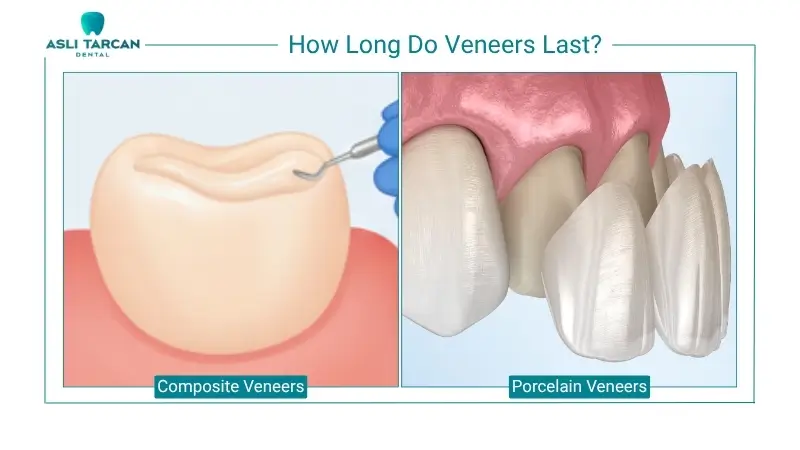
The durability of the veneers varies depending on their type. Veneers come in two types: composite and porcelain veneers. Both have different lifespans.
Composite Veneers
In contrast to porcelain veneers, composite veneers are thought to be reversible and require far less tooth preparation. They last only about five to seven years and are considered less durable because they’re made of composite resin material, which is weaker.
See Also: Composite Veneers After 5 Years
Porcelain Veneers
Porcelain veneers have the highest longevity with 90% at ten years, 96% at five years, and then falls to or range of 83%-91% at fifteen to twenty years. They’re constructed with a durable material known as porcelain, which holds up against stains and damage. They generally last 10 to 15 years, but can last longer if well cared for.
Process Of Replacing Veneers
The process of replacing old veneers is way simpler and faster than when they were installed the first time. You visit the dentist, and they remove the old veneers carefully.
Once the old veneers are removed, the dentist carefully cleans off any leftovers of the bonding so that the surface is clean and smooth for the new veneers to bond firmly.
The new veneers are then designed considering the size, shape, and structure of your natural teeth, so that they look natural. They may take some days to prepare, and hence, the dentists install the temporary veneers on your teeth till the permanent ones are ready.
When they’re ready, the dentist calls you and bonds them perfectly to your teeth, enhancing your smile and making it beautiful again.
What Happens If I Don’t Replace My Veneers?
If you don’t replace your veneers, these could be the consequences for your oral health.
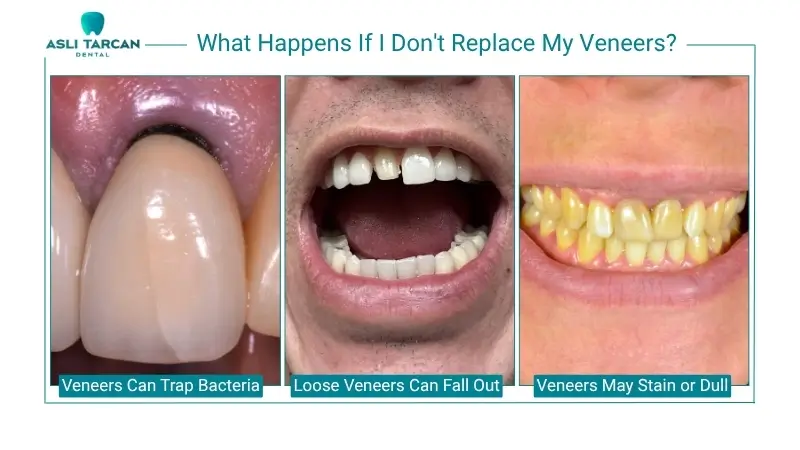
Veneers Can Trap Bacteria
As the veneers get older, they may develop gaps that can trap bacteria, causing tooth decay. The decay can cause further damage to your teeth.
Loose Veneers Can Fall Out
The old veneers may become unstable and can fall out anytime, which may be embarrassing if you’re in a social gathering. It could also be harmful for your teeth as they’ll be left exposed and unprotected.
Veneers May Stain or Dull
Over time, the veneers gradually stain and get dull due to food and drinks. They are no longer as bright and smooth as they were initially when they were installed. It may make your smile less attractive and bright, which may make you start hiding it again.
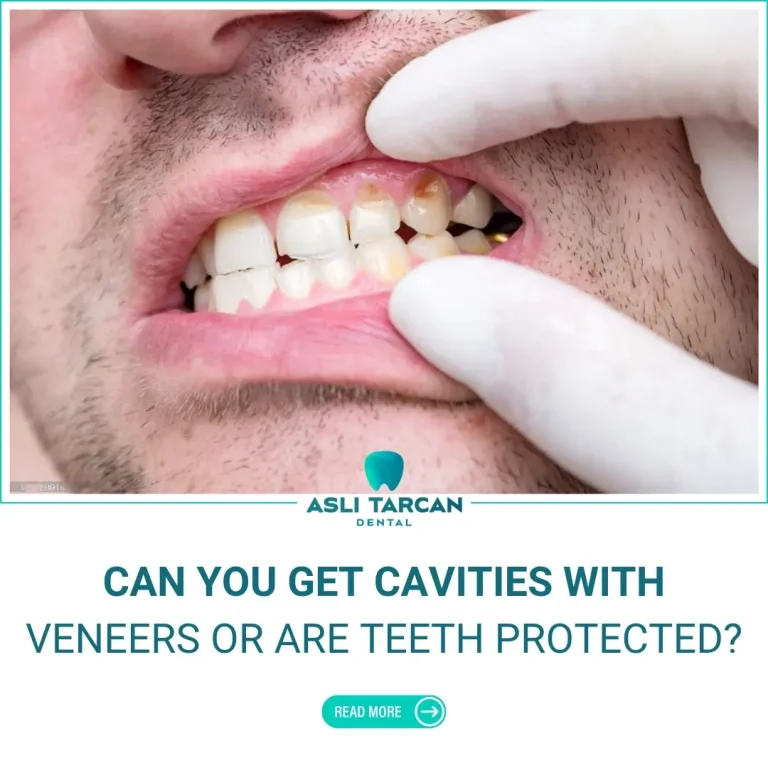
See Also: Can You Get Cavities With Veneers?
Factors That Influence the Lifespan of Veneers
As stated earlier, the material type, oral hygiene habits, lifestyle, teeth grinding or clenching habits, and professional care determine the lifespan of the veneers.
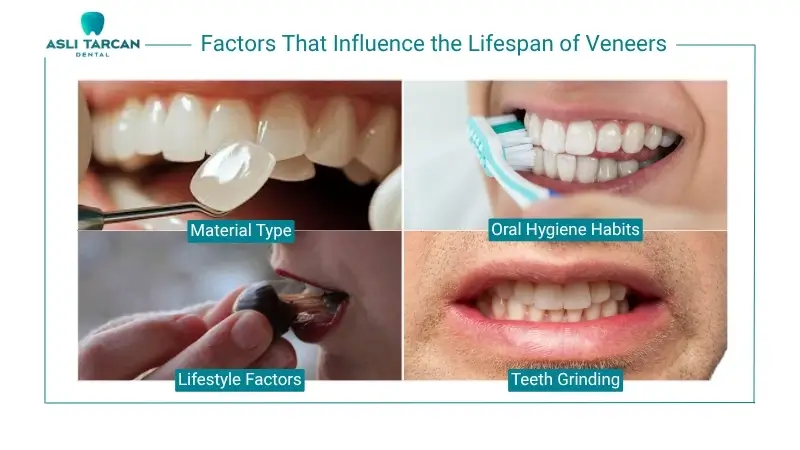
Material Type
How long the veneers last is determined by the material used in building them. Composite resin, which is a weaker material, is used in composite veneers.
Hence, their lifespan is usually around 5 to 7 years, which is way less compared to porcelain, which lasts around 10 to 15 years, as it’s built with porcelain, a strong material.
Oral Hygiene Habits
Brushing and flossing are two dental care habits that the dentist asks you to adopt after veneer application. The likelihood of tooth decay and damage is reduced by ensuring that the veneers are well cleaned and free of buildup. Consequently, adopt these dental hygiene practices.
Lifestyle Factors
One major thing affecting veneer longevity is your lifestyle. The veneers may chip, discolor, or crack more quickly if you consume meals and beverages that contain pigment and handle them aggressively. No matter if they’re porcelain or composite veneers, consistent hard or sticky foods, or pressure can break them.
Teeth Grinding Or Clenching
Some patients grind or clench their teeth on a regular basis. Composite veneers are more prone to breaking or cracking when compressed by clenching or grinding because of their weaker nature.
Although porcelain is more resilient, it can nevertheless break or wear over time due to frequent grinding.
Professional Care
In addition to taking care of your veneers on your own by changing your habits and way of life, you should make an appointment for routine examinations at your dentist’s office.
They can quickly identify any problems, such as loose or broken veneers, and thoroughly clean the composite or porcelain veneers.
If you want to get veneers from an experienced dentist in the Turkey, contact Asli Tarcan Dental Clinic today for a free consultation.
Signs That Indicate Your Veneers Need to Be Replaced
These are the signs that indicate it’s time to replace veneers.
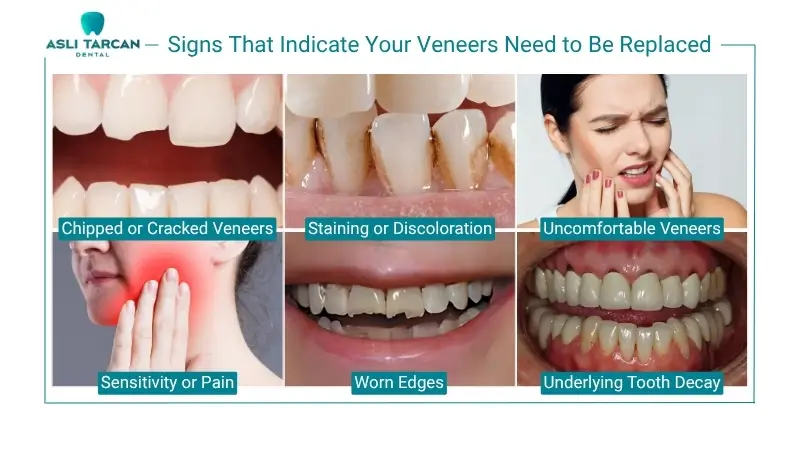
- Chipped or Cracked Veneers: If your veneers are chipped or cracked, they may affect not only the appearance but also the function of your teeth. It’s time to replace veneers.
- Staining or Discoloration: If the veneers have become discolored or much darker, the whitening treatments may not work for them. You may need to replace them.
- Loose or Uncomfortable Veneers: Your bite and everyday use may be affected if your veneers are loose and uncomfortable. It shows that veneer replacement is required.
- Sensitivity or Pain: Any sort of pain or sensitivity in the treated tooth indicates there’s something wrong, and you must talk to your dentist about it.
- Worn Edges: With time, the edges of the veneers may wear down or change in shape, making your smile appear unattractive.
- Gum Recession: If the gum tissues are getting pulled back, it indicates a poor fit of the veneers.
- Underlying Tooth Decay: Tooth decay can be harmful to your teeth and cause damage.
See Also: Good Veneers vs Bad Veneers
How Often Should You Visit the Dentist for Veneer Check-ups?
You should see your dentist every 6-12 months so they can assess the condition of the veneers, oral health, and also if veneer replacement is necessary. Regular dental checkups can help you catch issues early, when they can be treated without the need for replacement.
How to Extend the Lifespan of Your Veneers?
If you want to extend the lifespan of your veneers, this is how you can do that.

- Maintain Good Oral Hygiene: Brush twice every single day and floss so that the hard-to-reach areas in the mouth get cleaned.
- Avoid Hard Foods: Try not to have or limit hard or sticky foods, as they can stain the veneers and lead to cracking or chipping.
- Wear A Night Guard: Wear the night guard when you go to bed so that you don’t clench or grind while sleeping.
- Quit Smoking: Avoid smoking as it can stain and also be harmful to the gums and the veneers.

Schedule a Consultation at Asli Tarcan Dental Clinic for Veneer Care!
Irregularities on the teeth, whether they’re chips, gaps, discoloration, or stains, can make your smile unattractive, affecting your confidence. Let Asli Tarcan Dental Clinic help you with modern veneers from our experienced dentists who have hundreds of veneer placements in their records.
We offer a free consultation in which we assess your requirements and then suggest a personalized veneers plan that transforms your smile, making it flawless.
Conclusion
How often do you need to replace veneers? It depends on a number of variables, including lifestyle choices, the material used, and habits like clenching or grinding your teeth. On average, the porcelain veneers may need replacement after 10 to 15 years, while the composite veneers may take 5 to 7 years.
The time can be increased or decreased depending on how well you’re caring for the veneers. If you want to get modern veneer placements in Turkey, contact the Asli Tarcan clinic today.
FAQ’s
How Long Do Veneers Typically Last?
With proper care and maintenance, they can last 10 to 15 years.
When Should I Replace My Veneers?
Whenever you notice cracks, chips, discoloration, or feel uncomfortable or in pain wearing the veneers, replace them.
How Can I Extend The Lifespan Of My Veneers?
To extend the lifespan of the veneers, maintain their hygiene by brushing and flossing, avoid hard or sticky foods, and visit the dentist every 6 to 12 months.
What Are The Signs That My Veneers Need To Be Replaced?
Cracks, chips, gaps, discoloration, stains, and discomfort are the signs that the veneers need to be replaced.
Do Porcelain Veneers Last Longer Than Composite Veneers?
Yes, they do because the material used to create them is much stronger than composite veneers.
Can Veneers Be Replaced If They Get Damaged Or Worn Down?
Absolutely, whenever your veneers get damaged, you can take them to your dentist and they’ll replace them.
Is It Possible To Replace Just One Veneer, Or Do All Of Them Need To Be Replaced At Once?
Yes, you can replace only one veneer and leave the others untouched or unchanged.
Can Veneers Be Repaired, Or Do They Need To Be Replaced?
If the damage is minor, such as chips or cracks, it can be repaired. But severe damage requires replacements.