
How Much Are Teeth Shaved Down For Veneers?
Veneers have become a popular dental solution for imperfections of the teeth as they’re quick and offer immediate results. However, the tooth preparation is done before bonding the veneers, which involves removing enamel, a thin layer of the tooth. However, how much are teeth shaved down for veneers?
It depends on the type of veneers and the condition of the teeth. Normally, 0.3mm enamel is shaved down from the teeth, which can go up to 1mm in some cases. There are alternative no-prep veneers available as well, which require zero or minimal enamel removal, making them highly non-invasive despite offering a natural-looking smile.
How Much Are Teeth Shaved Down For Veneers?
Tooth shaving depends on the person’s teeth’ condition. If somebody has large, crooked, or greyish teeth, they may require more enamel removal compared to short teeth with gaps that need minimal shaving. However, in most cases, the dentists shave down the teeth by 0.3mm to 1mm.
The ultimate decision on how much of the enamel will be shaved has to be made by your dentist. They’ll assess your teeth condition, understand your requirements, and then decide how much of the teeth to be shaved.
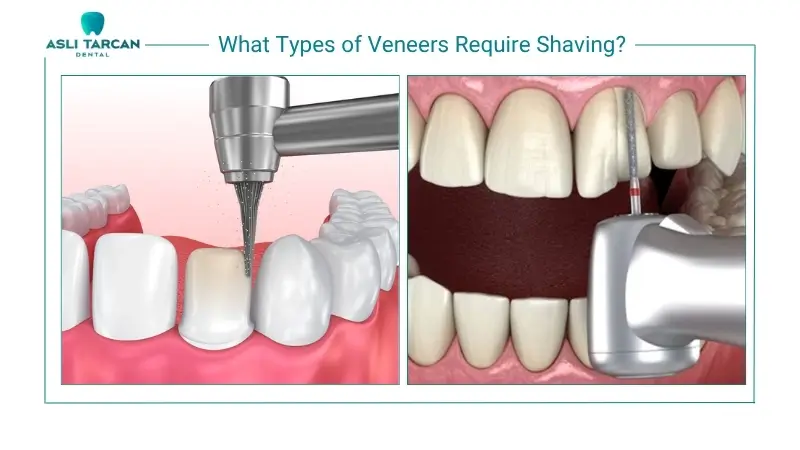
What Types of Veneers Require Shaving?
All the traditional veneers require teeth shaving. Whether it’s porcelain or composite veneers, they require shaving down the enamel for a perfect fit and to look natural. The porcelain veneers require more enamel removal than composite, as porcelain is thicker.
Why Are Teeth Shaved Down For Veneers?
The main reason to shave down teeth for veneers is to prepare the surface for the proper fit of the veneers and also ensure they look natural and not fake.
Removing the enamel layer fixes the minor stains, decay, and the minor flaws, creating a smoother surface for the veneers to bond perfectly.
Along with shaving, other tooth preparation may be done, such as whitening or surface treatment, to ensure the perfect fit of the veneers.
You must get it done by an experienced dentist who has done it many times in the past. Too much or too little removal of the enamel can cause issues with your teeth.
Is Tooth Shaving For Veneers Painful?
No, tooth shaving isn’t painful as it doesn’t require any drilling or major cutting. Only the thin layer of the enamel is removed, which is painless, and no anesthesia is needed.
However, some people may feel little to no discomfort depending on their body pain tolerance. When the procedure is done, even the little discomfort is gone.
How Long Does Teeth Shaving Take?
It depends on how much of the enamel is to be removed for veneers. Usually, it takes around 10 to 15 minutes to shape the teeth for veneers.
It doesn’t require an hour-long appointment just for shaving. After assessing the condition of your teeth, your dentist will give you an estimated time required for the procedure.
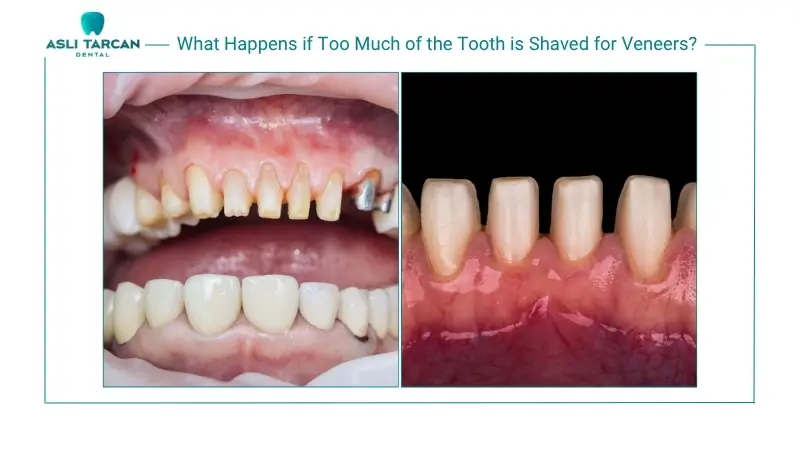
What Happens if Too Much of the Tooth is Shaved for Veneers?
Over-shaving of the tooth for veneers can cause tooth sensitivity, increase the risk of decay, gum issues, structural weakness, and permanent veneer dependence.
Therefore, make sure you choose an experienced dentist who carefully removes the enamel, ensuring not to over-shave. If the tooth gets sensitive, you can manage it with the toothpaste for sensitive teeth, diet adjustments, and regular dental checkups.
See Also: Bad Veneers vs Good Veneers
Benefits Of Shaving Down Teeth Before Veneers
These are the benefits of shaving down teeth before bonding veneers.
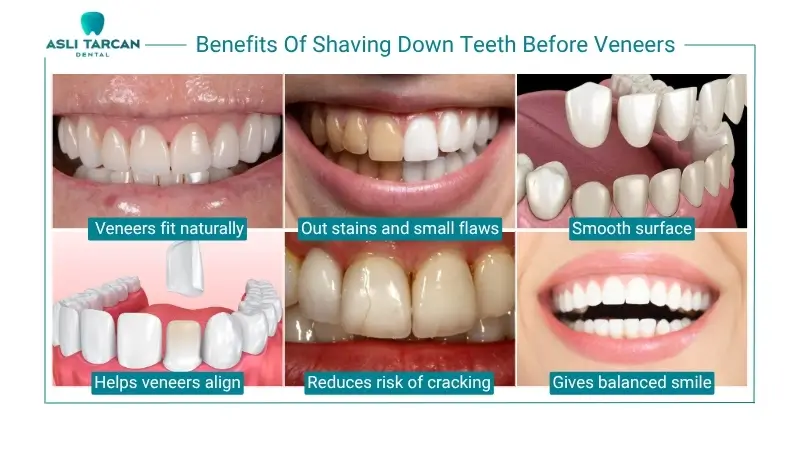
- Shaving helps veneers fit naturally.
- It evens out stains and small flaws.
- Creates a smooth surface for better bonding.
- Makes your smile look seamless.
- Helps veneers align with your teeth.
- Reduces the risk of cracking or shifting.
- Gives a polished and balanced smile.
Potential Risks of Shaving Enamel For Veneers
There are some potential risks of shaving enamel for veneers that include enamel weakening, increased risk of decay, staining and chipping, and limited longevity.
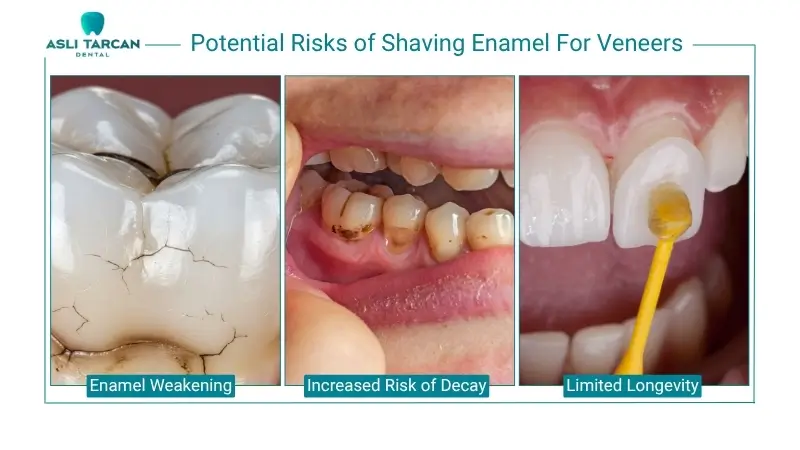
Enamel Weakening
Shaving the teeth involves removing parts of the enamel, which, if overdone, can cause weakening in the tooth structure. It may increase the vulnerability to damage over time.
Increased Risk of Decay, Staining, and Chipping
Reduced enamel may make the teeth more prone to cavities, staining, and chipping. The veneers or the natural teeth may also crack.
Limited Longevity
Veneers stay with you for years, but they’re still not a permanent solution. You need to replace them over time. Plus, you need to maintain them for optimal results.
Maintaining Your New Smile After Veneers
After getting the veneers, you need to maintain them properly with excellent oral hygiene, avoiding hard and crunchy foods, reducing exposure to staining foods, and being careful with daily habits.

Maintain Excellent Oral Hygiene
Don’t skip oral hygiene. Brush your teeth regularly to keep your veneers clean and looking brighter. By maintaining oral care, you prevent decay and prolong the life of the veneers. Furthermore, attend regular dental checkups so that issues can be spotted on time and any loose veneers can be fixed.
Avoid Hard or Crunchy Foods
Stay away from chewing ice, hard candies, or other tough foods. Don’t try to open bags or zips with your teeth or use them as tools in any way, as that can lead to cracks, chips, and damage to the veneers. Stick to the softer foods.
See Also: Can You Eat With Pop On Veneers?
Reduce Exposure to Staining Substances
All the foods that cause staining can make the veneers look discolored and also affect their durability. Limit coffee, tea, red wine, or smoking as these substances can stain veneers, affecting their brightness and longevity. If you consume any of these, brush your teeth and rinse your mouth properly.
Be Careful With Daily Habits
Using your teeth as tools to open packages or hold objects should be avoided. It puts unnecessary strain on veneers that can cause damage or loosening. Avoid doing this to significantly improve the lifespan of your veneers and keep them looking good.
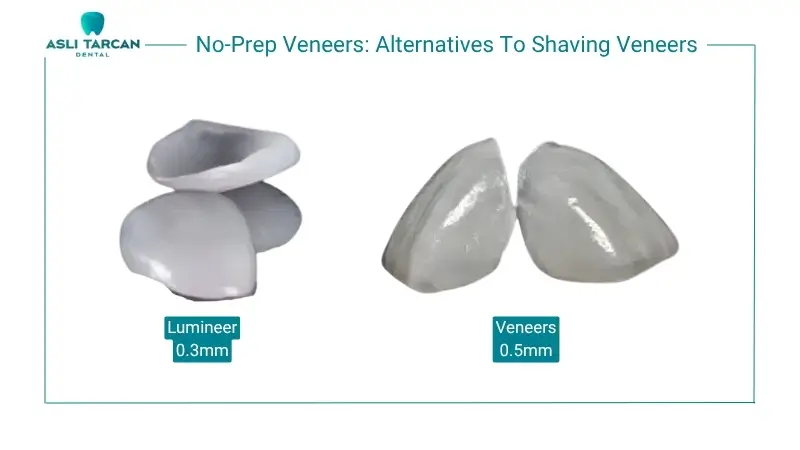
No-Prep Veneers: Alternatives To Shaving Veneers
Can I get the veneers without shaving? Yes, it’s possible to get the veneers without shaving. There are some thin non-prep veneers, such as Lumineer, which are about 0.3mm thick.
They can easily be placed over the front surface of your teeth without requiring any enamel removal. They can widen the smile, fix the imperfections all the way to the second premolar,without any shaving required.
The advantages of these veneers are that they preserve the natural teeth, are minimally invasive, and are also reversible in some cases. The limitations of these veneers are that they can’t fix severe dental issues such as crooked teeth or major discoloration.
Traditional Dental Veneers vs. Non-Prep Veneers
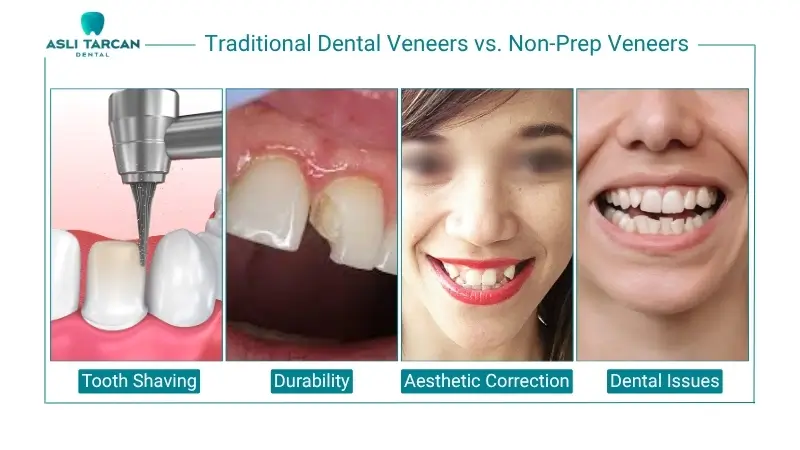
Let’s compare the non-prep veneers vs traditional dental veneers so that you know the difference between both and decide better.
Tooth Shaving
The first difference between the non-prep and the traditional veneers is that traditional veneers require enamel removal to fit properly, but the non-prep veneers don’t. They’re thin and can look natural and fit perfectly without any shaving.
Durability
The durability of the traditional dental veneers can go from 10 to 15 years, and if taken good care of, can be even longer. However, the no-prep veneers generally have a shorter lifespan and may wear out sooner.
Aesthetic Correction
Traditional veneers can fix severe irregularities such as crooked, stained, or uneven teeth. While non-prep veneers are better suited for mild cosmetic concerns, not for the severe ones. If you have severe dental issues, you are better off taking the traditional veneers.
Suitability For Dental Issues
Non-prep veneers are ideal for individuals with minor dental issues such as mild discoloration, chips, and misalignments. While for the severe issues, traditional veneers work great as they’re designed to fix a range of problems.
Choose the Right Dentist For Non-Prep Veneers
For the non-prep veneers to give you a natural-looking, brighter, and flawless smile, the artistic skills of the dentist are required. Inexperienced dentists who haven’t done it before may cause more harm than good. Therefore, follow these tips to choose the right dentist for Lumineers
- Don’t just pick any dentist that you see or come across online. Schedule consultations with 2 to 3 cosmetic dentists to compare their quotes and learn about their experience.
- Don’t hesitate to ask for photos of the cases they have personally done in the past. If they don’t show the photos, you’d better avoid them as they’re probably not experienced.
- Check if the dentist takes several photos of you to plan and visualize the dental conditions for natural-looking results. If they don’t do it, it shows their lack of skills.
- Ask the dentists not to shave down too much of the enamel to preserve the natural teeth. You should ask them how much enamel is to be removed so that you know afterwards if they’ve overremoved it.

Asli Tarcan Dental Clinic: Trusted Cosmetic Dentistry
How much are teeth shaved down for veneers? It depends on the veneer type used and the condition of the teeth. Usually, the shaving is done around 0.3mm to 1mm to make up a good space for the veneers, fixing the minor imperfections such as stains, discoloration, or uneven surfaces, creating a smoother surface for the veneers to bond perfectly.
The over-removal of the enamel can cause increased risk of decay, sensitivity, structural weakness, and permanent dependence on the veneers. Therefore, choose experienced dentists from Asli Tarcan Dental Clinic, where we have fully licensed and experienced dentists with years of experience with traditional and non-prep veneers. Contact us today to transform your smile without over-shaving the teeth.
FAQS
How much do they shave down teeth for veneers?
It depends on the tooth condition and the veneer type, but usually, the dentist shaves down the teeth from 0.3mm to 1mm.
Is shaving teeth for veneers worth it?
Yes, it’s an important step as it ensures a natural fit, smooth surface, and long-lasting, well-aligned veneers.
Do teeth get ground down for veneers?
Only a thin layer of the enamel is removed to ensure a perfect fit for the veneers. Nothing else is ground or removed.